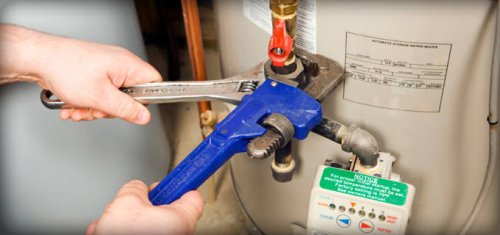
Hard Water Impact on Gilbert AZ Water Heaters
Learn how hard water affects water heaters in Gilbert, Arizona. Discover scale signs, maintenance tips, repair steps, and when to call (844) 833-2093
How Hard Water Affects Water Heaters in Gilbert, Arizona
Living in the East Valley means enjoying sun-drenched winters, vibrant communities, and gorgeous views of the Superstition Mountains. However, for homeowners and commercial property managers in Gilbert, Arizona, there is a hidden, relentless villain operating inside every plumbing system: hard water.
Whether your home is located off Val Vista Drive, near SanTan Village, or down along Pecos Road, your water heater works around the clock to supply hot water for showers, dishwashers, and laundry. Unfortunately, the water flowing through Town of Gilbert municipal lines and local groundwater wells is packed with heavy dissolved minerals.
In this comprehensive guide written by senior plumbing specialists, you will learn exactly how hard water affects water heaters in Gilbert, Arizona, why sediment buildup ruins heating elements, the critical warning signs to watch for, step-by-step professional repair and flushing procedures, and long-term maintenance strategies to protect your investment.
Introduction
Hot water is something most homeowners do not think about until the morning shower suddenly turns ice cold or the garage floods. In Gilbert, water heater breakdowns rarely happen without warning; rather, they are the result of months or years of mineral accumulation inside the tank or heat exchanger.
Water heaters in Arizona face harsher environmental conditions than almost anywhere else in the nation. The combination of intense ambient summer temperatures, heavy regional mineral loads, and continuous heating cycles creates a chemical environment where calcium and magnesium rapidly convert into solid scale. Understanding how hard water affects water heaters in Gilbert, Arizona gives property owners the knowledge needed to take preventative action before facing an unexpected, costly replacement.
If you suspect hard water is taking a toll on your home’s plumbing, or if your water heater is popping, rumbling, or slow to heat, the expert team at gilbertaz plumbers is here to help. You can reach our local office at (844) 833-2093 or visit us at 1760 E Pecos Rd, Gilbert, AZ 85295.
What Is How Hard Water Affects Water Heaters in Gilbert, Arizona?
To understand how hard water affects water heaters in Gilbert, Arizona, one must first understand what "hard water" actually means in the Sonoran Desert.
Water hardness is measured in grains per gallon (GPG) or parts per million (PPM / mg/L). According to the U.S. Geological Survey (USGS) and municipal water testing data:
-
Soft Water: 0 to 3.5 GPG (0–60 PPM)
-
Moderately Hard Water: 3.6 to 7.0 GPG (61–120 PPM)
-
Hard Water: 7.1 to 10.5 GPG (121–180 PPM)
-
Very Hard Water: 10.6+ GPG (181+ PPM)
In Gilbert, Arizona, tap water consistently tests between 11.5 GPG and 18 GPG (roughly 197 to over 300 PPM), placing it solidly in the "Very Hard" category.
The Chemistry of Scale Formation
When hard water enters a storage tank or tankless water heater, it carries dissolved calcium carbonate ($CaCO_3$) and magnesium sulfate ($MgSO_4$). Under ambient temperatures, these minerals stay dissolved in solution. However, when the water heater’s burner or heating element raises the water temperature above $120^\circ\text{F}$ ($49^\circ\text{C}$), a chemical precipitation reaction occurs:
The soluble calcium bicarbonate breaks down into solid calcium carbonate (lime scale or sediment), which precipitates out of the liquid and settles at the bottom of the water heater tank or adheres directly to internal heating coils.
       TYPICAL STANDARD TANK VS. HARD WATER SEDIMENT TANK

   +-----------------------+           +-----------------------+
   |   Cold In   Hot Out   |           |   Cold In   Hot Out   |
   |      |         |      |           |      |         |      |
   |      v         ^      |           |      v         ^      |
   |                       |           |                       |
   |     [Clean Water]     |           |     [Turbid Water]    |
   |                       |           |                       |
   |  ===================  | Upper     |  ===================  | Upper
   |    Heating Element    | Element   |    Heating Element    | Element
   |                       |           |                       |
   |                       |           |                       |
   |  ===================  | Lower     |  [ Scale Encased ]    | Burned Out
   |    Heating Element    | Element   |  ===================  | Element
   |                       |           | ::::::::::::::::::::: | Sediment
   |                       |           | ::::HARD SCALE GRAPH:::| Blanket
   +-----------------------+           +-----------------------+
         Clean Bottom                      3-6 Inches Scale
Why Does This Plumbing Problem Happen?
Hard water issues in Gilbert are governed by regional geology, water sourcing, and thermal mechanics:
1. The Sonoran Desert Geology and Water Sources
Gilbert relies on a blend of surface water delivered via the Salt River Project (SRP) and Central Arizona Project (CAP) canals, supplemented by deep groundwater wells. Surface water travels over mineral-rich riverbeds, while deep well water trickles through ancient underground limestone and rock formations, saturating the supply with calcium and magnesium ions before reaching your home.
2. Thermal Acceleration
Heat speeds up chemical mineral precipitation. The bottom burner of a gas water heater can reach temperatures exceeding $300^\circ\text{F}$ on the outside of the glass-lined tank wall. This extreme heat forces dissolved minerals to instantly form a solid crust.
3. Dissimilar Metal Galvanic Action
When mineral scale coats metal heating elements, sacrificial anode rods, and dip tubes, it disrupts the internal balance of the unit. The mineral crust creates localized hot spots, accelerating thermal fatigue, corrosion, and microscopic cracking.
4. Poor System Maintenance
When water heaters do not undergo routine flushing, the annual accumulation of 5 to 15 pounds of mineral sludge forms an impenetrable thermal barrier between the heat source and the water.
Signs You Should Never Ignore
Recognizing hard water damage early can save you thousands of dollars in premature replacement costs. Watch for these red flags:
-
Popping or Rumbling Noises: Often called "kettling," this popping sound occurs when water trapped beneath a thick layer of rock-hard mineral scale turns to steam and bubbles violently through the sediment crust.
-
Tepid or Slow-to-Heat Water: Mineral scale acts as an insulator. If a 1/2-inch layer of lime scale coats the bottom of your tank, your water heater must run up to 30% longer to achieve the same water temperature.
-
Cloudy, Milky, or Discolored Tap Water: Fine mineral particles floating off the sediment bed can give hot water a milky, chalky, or yellowish appearance.
-
Foul "S Rotten Egg" Odor: Heavy mineral environments combined with a degrading magnesium anode rod allow sulfate-reducing bacteria to thrive inside the warm, sediment-rich tank, generating hydrogen sulfide gas.
-
Low Hot Water Pressure: Scale fragments break loose from the tank and lodge in hot water supply lines, mixing valves, showerheads, and aerators.
-
Leaking Around the Base or Temperature Pressure Relief (TPR) Valve: Scale accumulation blocks thermal expansion and over-pressurizes the tank, forcing water past the TPR valve or causing the bottom weld to fracture.
Common Plumbing Problems Related to This Issue
The impact of hard water on your water heater extends throughout your property's entire plumbing system:
                          HARD WATER SEDIMENT IMPACT
                                     |
         +---------------------------+---------------------------+
         |                                                       |
         v                                                       v
TANK WATER HEATERS                                      TANKLESS WATER HEATERS
  • Thermal Barrier Efficiency Loss                       • Heat Exchanger Scale Clogging
  • Lower Element Burnout                                 • Code "E5" / "11" Ignition Errors
  • Dip Tube Degradation                                  • Recirculation Pump Cavitation
  • Bottom Tank Corrosion & Cracking                      • Flow Sensor Jamming
         |                                                       |
         +---------------------------+---------------------------+
                                     |
                                     v
                           DOWNSTREAM PLUMBING
                             • Clogged Faucet Aerators
                             • Sticking Shower Cartridges
                             • Premature Washing Machine Valve Failure
-
Premature Heating Element Burnout: In electric water heaters, scale encases the lower heating element, causing it to overheat and snap.
-
Heat Exchanger Clogging in Tankless Units: Tankless units have narrow copper or stainless steel heat exchanger passages. Scale buildup quickly restricts flow, causing system error codes and unexpected shutdowns.
-
Anode Rod Exhaustion: The sacrificial anode rod attracts corrosive elements to protect the steel tank. In Gilbert's hard water, standard anode rods can disintegrate within 18 to 24 months instead of lasting 4 to 6 years.
-
Fixture and Cartridge Ruin: Calcified flakes from the water heater travel down line, ruining expensive thermostatic shower valves and ceramic disc faucets throughout your home.
Step-by-Step Professional Repair Process
When you call gilbertaz plumbers at (844) 833-2093, our licensed technicians execute a methodical, safety-first restoration process:
  +-----------------------------------------------------------------+
  | STEP 1: Thermal & Electrical Shutdown                           |
  | Turn off gas valve / trip circuit breaker; verify zero power.   |
  +-----------------------------------------------------------------+
                                  |
                                  v
  +-----------------------------------------------------------------+
  | STEP 2: Comprehensive Diagnostic Inspection                      |
  | Check TPR valve, anode rod condition, and mineral depth.        |
  +-----------------------------------------------------------------+
                                  |
                                  v
  +-----------------------------------------------------------------+
  | STEP 3: High-Flow Powered Tank Flush / Chemical Descale         |
  | Connect full-port hose or pump circulating food-grade descaler. |
  +-----------------------------------------------------------------+
                                  |
                                  v
  +-----------------------------------------------------------------+
  | STEP 4: Component Inspection & Replacement                      |
  | Replace depleted anode, test heating elements & drain valve.    |
  +-----------------------------------------------------------------+
                                  |
                                  v
  +-----------------------------------------------------------------+
  | STEP 5: Refill, Bleed Air & Hydrostatic Pressure Testing        |
  | Fill tank, purge trapped air, test operating pressure & flow.   |
  +-----------------------------------------------------------------+
Step 1: Thermal & Electrical Isolation
Safety is paramount. For electric water heaters, we switch off the dedicated 240V breaker. For gas water heaters, we turn the gas control valve to the "VACATION" or "OFF" setting and shut off the gas supply line.
Step 2: System Diagnostic Inspection
We inspect the exterior shell, flue pipe, thermal expansion tank, and Temperature & Pressure Relief (TPR) valve. Using specialized instruments, we check electrical continuity across heating elements and measure line voltage.
Step 3: Controlled High-Flow Flushing or Descaling
-
For Standard Tank Heaters: We connect a commercial-grade, full-port drain hose to the bottom drain valve. If the factory plastic valve is clogged with rocks of scale, we replace it with a full-port brass ball valve. We flush the unit under pressure to agitate and extract sediment.
-
For Tankless Heaters: We connect a recirculation pump kit to the service valves and circulate a food-grade, non-corrosive descaling solution through the heat exchanger for 45 to 60 minutes to dissolve mineral scale.
Step 4: Anode Rod Inspection & Replacement
We unscrew the sacrificial anode rod. If more than 75% of the core wire is exposed, we replace it with a premium powered titanium anode or powered segmented rod designed specifically for high-mineral desert environments.
Step 5: Refill, System Purge & Leak Check
We fill the tank with cold water while keeping a hot water faucet open nearby to purge all air from the system. Once the tank is completely full, power or gas is restored.
Step 6: Operational Testing & Flow Verification
We monitor a complete heating cycle, checking thermostatic cutoffs, amp draws, water temperature output at fixtures, and gas combustion draft.
Can You Fix It Yourself?
Understanding what you can safely do as a DIY project—and when to bring in a licensed professional—protects both your safety and your home's warranty.
Safe DIY Maintenance Tasks
-
Visual Monthly Inspections: Check around the base of the tank and pipe connections for moisture, white crusty powder (efflorescence), or rust streaks.
-
Temperature Adjustment: Keep your water heater set to $120^\circ\text{F}$ ($49^\circ\text{C}$). Setting it higher speeds up mineral precipitation.
-
Basic Water Softener Salt Top-Offs: If you have a whole-home water softener, keep the brine tank filled with high-purity salt pellets.
When DIY Attempts Become Dangerous
-
Replacing Stuck Anode Rods: Anode rods are torqued down at the factory up to 80–100 ft-lbs. Trying to break them loose with basic hand tools can tip over an unanchored water heater or snap internal fittings.
-
Flushing Heavy Mineral Buildups: If a tank hasn't been flushed in 4+ years, flushing it can dislodge large chunks of scale that block the drain valve or create new leaks in weakened tank walls.
-
Gas Line or Electrical Adjustments: Working on 240V high-voltage circuits or natural gas lines carries risk of shock, fire, or gas leaks. Always trust a licensed plumber for these repairs.
Tools Professionals Use
To combat the extreme mineral conditions in Gilbert, gilbertaz plumbers uses specialized plumbing technology:
-
High-Flow Submersible Transfer Pumps: Used to forcibly extract thick, heavy mineral slurry from the bottom of storage tanks.
-
Rotary Borescopes & Fiber-Optic Inspection Cameras: Allow plumbers to inspect internal tank walls, heat exchanger tubes, and dip tube condition without dismantling the unit.
-
Powered Descaling Recirculation Rigs: Purpose-built pumping loops for tankless heat exchanger flushing.
-
Digital Multimeters & Clamp Ammeters: Used to measure precise electrical resistance ($\Omega$) across heating elements and thermostatic controls.
-
Thermal Imaging Cameras: Identify localized hot spots, thermal insulation breakdown, and hidden tank leaks instantly.
How Long Does the Repair Usually Take?
The required time depends on the extent of mineral buildup, accessibility, and the specific service needed:
| Service Type | Average Time Required | Key Factors Influencing Timeline |
| Standard Tank Flush & Inspection | 45 – 75 Minutes | Degree of sediment solidification, drain accessibility |
| Tankless Heat Exchanger Descaling | 60 – 90 Minutes | Thickness of scale, pump circulation time required |
| Anode Rod & Element Replacement | 1 to 2 Hours | Overhead clearance, corrosion on threads |
| Complete Water Heater Replacement | 3 to 5 Hours | Code upgrades, expansion tank installation, venting modifications |
Cost Factors
Every home’s plumbing setup is unique. Rather than relying on inaccurate online estimates, consider these primary factors that influence repair or replacement costs:
-
Diagnostic & Testing Fees: Covers complete system inspection, electrical testing, and safety evaluation.
-
Severity of Mineral Buildup: Extremely neglected systems may require heavy-duty descaling compounds, specialty valves, or multiple flush cycles.
-
Component Replacement Needs: Replacement parts vary in price, from basic heating elements to electronic gas control valves or powered titanium anode rods.
-
Accessibility & Location: Water heaters located in tight crawlspaces, attic platforms, or enclosed closets require additional labor to access safely.
-
Permitting & Local Code Requirements: The Town of Gilbert requires plumbing permits and code compliance checks (such as thermal expansion tanks, drip pans, and proper seismic strapping) for full replacements.
Industry Note: Plumbing repair costs vary depending on the severity of the problem, accessibility, materials required, emergency service, property type, and local labor rates.
Hidden Truths Homeowners Should Know
-
Small Leaks Quickly Become Expensive Repairs: A minor drip from a scale-clogged TPR valve can rot surrounding subflooring, drywall, and baseboards within days.
-
Cheap Temporary Fixes Often Fail: Chemical drain cleaners or store-bought flush kits cannot dissolve inches of solid calcium carbonate inside a water heater.
-
Homeowners Insurance May Deny Claims for Neglect: Insurance policies often exclude coverage for water damage resulting from slow, long-term leaks or lack of routine maintenance.
-
Hard Water Radically Shortens Appliance Lifespan: A standard water heater rated for 10–12 years elsewhere may fail in just 5–7 years in Gilbert without regular flushing.
-
DIY Mistakes Can Void Manufacturer Warranties: Installing incorrect elements or damaging internal glass linings during DIY maintenance can void your factory warranty.
-
Hard Water Accelerates Utility Bill Increases: A 1/4-inch layer of scale forces your unit to consume up to 25% to 30% more energy to heat the same volume of water.
-
Tank Failures Are Abrupt and Destructive: When scale-induced bottom corrosion reaches a critical point, steel tanks can rupture, releasing 40 to 80 gallons of water in minutes.
-
Mold Grows Rapidly in Desert Homes: In Gilbert's warm environment, hidden water heater leaks behind garage walls can foster toxic mold growth within 24 to 48 hours.
-
Sediment Hides Hydrogen Sulfide Bacteria: Dark, warm mineral beds provide an ideal breeding ground for harmless but smelly sulfur-producing bacteria.
-
Annual Maintenance Costs a Fraction of Emergency Replacement: Routine flushing costs a small fraction of an emergency weekend replacement and cleanup.
15 Common Mistakes Homeowners Make
-
Ignoring Popping Noises: Treating rumbling sounds as harmless instead of recognizing severe sediment accumulation.
-
Setting Water Temperature Above 120°F: Accelerating mineral precipitation and scale buildup unnecessarily.
-
Neglecting the Sacrificial Anode Rod: Allowing the anode rod to fully dissolve, leaving the steel tank unprotected against corrosion.
-
Skipping Annual Flushes: Waiting until hot water runs out completely before servicing the unit.
-
Installing the Wrong Replacement Elements: Using high-watt-density elements in hard water areas instead of low-watt-density stainless steel elements.
-
Using Plastic Drain Valves: Leaving cheap factory plastic drain valves installed, which easily clog or snap during maintenance attempts.
-
Forgetting to Flush Tankless Units: Believing tankless systems are "maintenance-free" when they actually scale up faster than tank models.
-
Over-Tightening Threaded Pipe Connections: Cracking water heater nipples or brass fittings by applying excessive torque.
-
Hiring Unlicensed Handymen: Entrusting complex gas and high-voltage electrical plumbing work to uncertified workers.
-
Draining a Tank Without Shutting Off Power: Burning out heating elements instantly by leaving power connected while the tank is empty.
-
Disregarding Thermal Expansion: Failing to install or maintain an expansion tank on a closed plumbing system.
-
Ignoring Flue Pipe Corrosion: Allowing acidic condensation from mineral-laden exhaust to corrode gas unit vent pipes.
-
Placing Items Around the Heater: Blocking combustion air vents on gas units with household storage items.
-
Waiting Until an Emergency to Call a Plumber: Paying premium weekend or middle-of-the-night emergency fees for preventable issues.
-
Over-Relying on Saltless Conditioners: Assuming magnetic or salt-free water "conditioners" completely eliminate water heater scale in ultra-hard desert water environments.
Maintenance Tips
Follow these 18 practical maintenance tips to protect your water heater in Gilbert, Arizona:
                  ANNUAL WATER HEATER PROTECTION CALENDAR

  +-----------------------+-----------------------+-----------------------+
  |    EVERY 1 MONTH      |    EVERY 6 MONTHS     |    EVERY 12 MONTHS    |
  +-----------------------+-----------------------+-----------------------+
  | • Visual leak check   | • Test TPR Valve      | • Complete Tank Flush |
  | • Check water temp    | • Inspect Venting     | • Anode Rod Check     |
  | • Salt level check    | • Clean Air Filter    | • Descale Tankless    |
  +-----------------------+-----------------------+-----------------------+
-
Flush Every 6 to 12 Months: Schedule bi-annual flushes if you do not have a whole-home water softening system.
-
Keep Temperature at 120°F ($49^\circ\text{C}$): Limits mineral drop-out while maintaining comfortable domestic hot water.
-
Upgrade to Low-Watt Density Elements: Choose fold-back stainless steel elements designed to resist mineral encrustation.
-
Inspect the Anode Rod Annually: Replace the rod as soon as the core wire becomes exposed.
-
Consider a Powered Anode Rod: Powered titanium anodes do not degrade and actively resist sulfur smells.
-
Install a Whole-Home Water Softener: Ion-exchange softeners remove calcium and magnesium before they reach your heater.
-
Replace Plastic Drain Valves with Brass: Full-port brass ball valves allow sediment chunks to flush out freely.
-
Test the TPR Valve Twice a Year: Lift the lever briefly to verify it discharges freely and reseats tightly.
-
Check the Thermal Expansion Tank: Ensure the air charge matches incoming street water pressure (typically 50–65 PSI).
-
Maintain 12 Inches of Clearance: Keep gas water heaters clear of flammable storage items and clutter.
-
Install an Automatic Water Shut-Off Valve: Smart shut-off valves detect leaks and isolate water supply automatically.
-
Insulate Hot Water Pipes: R-4 foam pipe insulation reduces heat loss and standby heating cycles.
-
Descale Tankless Exchangers Regularly: Flush tankless systems with food-grade descaler every 12 months.
-
Inspect Gas Venting Connections: Look for white powder corrosion or loose joints on gas flue pipes.
-
Monitor Your Water Meter: Check for slow, unseen leaks by watching for meter movement when all taps are closed.
-
Clean Tankless Inlet Filters: Remove and clean the small mesh inlet filter screen quarterly.
-
Install a Drip Pan Under the Unit: Ensure the pan drains directly to the exterior or a safe location.
-
Schedule Professional Inspections: Have a licensed technician conduct an annual multi-point safety check.
When Should You Call an Emergency Plumber?
Some water heater situations require immediate professional intervention to protect your family and property:
-
Active Tank Leakage or Flooding: If water is pooling beneath your water heater or pouring from the cabinet wall, shut off the main water valve immediately and call an emergency plumber.
-
Gas Odors Near the Heater: If you smell sulfur or rotten eggs near a gas water heater, evacuate the premises immediately, call Southwest Gas, and contact our emergency repair team.
-
Scald Hazards or Boiling Water Sounds: If steam or boiling water sputters violently from taps, the internal thermostat may have stuck open, causing extreme over-pressurization.
-
Electrical Burning Smells or Tripped Breakers: Burning plastic smells near electric access panels indicate fried wiring or shorted heating elements.
Delaying action in emergency situations risks severe property damage, structural rot, and health hazards.
Frequently Asked Questions
1. How does hard water specifically harm water heaters in Gilbert, AZ?
Gilbert's water contains high levels of dissolved calcium and magnesium. When heated, these minerals form solid lime scale that coats heating elements, settles at the bottom of standard tanks, and clogs tankless heat exchangers, leading to efficiency loss and premature equipment failure.
2. How often should I flush my water heater in Gilbert?
Because local water hardness ranges between 11.5 and 18 GPG, we recommend flushing standard tank water heaters every 6 to 12 months. Tankless units should undergo professional descaling once a year.
3. Why is my water heater making a loud popping or rumbling noise?
This noise, known as "kettling," happens when water gets trapped beneath a layer of mineral scale at the bottom of the tank. As the burner heats the metal bottom, the trapped water boils into steam bubbles that pop violently through the hard mineral crust.
4. Can hard water cause my water heater tank to leak?
Yes. Mineral scale creates localized hot spots that weaken glass linings and steel welds. Additionally, scale clogs safety relief valves, leading to excess internal pressure that eventually cracks tank walls.
5. How long do water heaters last in Gilbert, Arizona?
In milder water regions, water heaters can last 10 to 12 years. In Gilbert's ultra-hard water environment, unmaintained units often fail in just 5 to 7 years. Proper maintenance and water softening can extend lifespan back up to 10+ years.
6. Will a water softener save my water heater?
Yes. Installing an ion-exchange water softener removes calcium and magnesium before water enters the heater, preventing scale formation, protecting heating elements, and extending equipment life.
7. What is the difference between flushing and descaling a water heater?
Flushing involves draining water and loose sediment from a storage tank. Descaling involves circulating an acidic solution (such as food-grade descaler or vinegar) through the system to chemically dissolve stuck lime scale from elements and heat exchangers.
8. Why is my hot water pressure suddenly low while cold water pressure is normal?
Mineral scale chunks inside the tank can break off and travel into the hot water outlet pipe, clogging hot water supply lines, shut-off valves, or faucet aerators.
9. Can I replace a water heater element myself?
While possible for skilled DIYers, replacing an element requires turning off 240V power, draining the tank below element level, unscrewing calcified threads without damaging tank walls, and verifying correct wire connections. Professional replacement ensures safety and proper operation.
10. Does hard water affect tankless water heaters faster than tank heaters?
Yes. Tankless water heaters pass water through narrow heat exchanger tubes. High heat combined with small clearances causes mineral scale to restrict flow and overheat components faster than in large storage tanks.