Slab Leak Detection in Gilbert AZ: Diagnostic Guide
Learn how to detect slab leaks in Gilbert homes, understand post-tension foundation risks, and evaluate spot repairs versus overhead PEX rerouting.
Understanding Slab Leaks in Gilbert, Arizona Foundations
A slab leak occurs when a pressurized water supply line—typically copper piping installed beneath a concrete slab-on-grade foundation—develops a pinhole breach, joint failure, or structural rupture. In Gilbert, Arizona, where expansive clay soils, aggressive mineral content in municipal water, and shifting ground dynamics strain residential infrastructure, these hidden failures demand immediate diagnostic attention. When a sub-slab pipe compromises, water continuously escapes under hydraulic pressure, eroding sub-grade soil, saturating the base foundation, and threatening the structural integrity of post-tension or rebar-reinforced concrete foundations.
Plumbing systems in East Valley homes generally rely on copper tubing routed directly through or beneath concrete foundations. Over decades, constant thermal expansion and contraction, combined with chemical interactions between native soils and pipe walls, create localized stress concentrations. Distinguishing between a fixture-specific leak (such as a faulty angle stop or running toilet) and a sub-slab supply leak requires systematic isolation techniques. If your water meter's low-flow indicator spins while all indoor and outdoor hose bibbs remain fully closed, the issue originates within the main supply path, frequently pointing to a sub-slab breach.
The Mechanics of Sub-Slab Pipe Failure in the Desert
Sub-slab piping failures are driven by a combination of soil chemistry, municipal water characteristics, and thermal stress. Gilbert water, supplied by surface water projects and deep groundwater wells, contains high total dissolved solids (TDS), calcium, and magnesium. While hard water scaling coats pipe interiors over time, localized turbulence and chemical imbalances can accelerate pitting corrosion on copper walls. Furthermore, the aggressive external environment of Maricopa County expansive soils subjects buried copper to abrasive friction whenever ground moisture content fluctuates between torrential monsoon seasons and extreme arid dry spells.
Post-tension foundations, common throughout Gilbert residential master-planned communities, feature high-strength steel cable tendons tensioned to keep concrete under compression. When a slab leak saturates the sub-grade soils beneath a post-tension foundation, soil settlement can occur unevenly. While the steel cables provide immense structural support, long-term soil washout beneath the perimeter or interior grade beams creates voids. These voids shift the load distribution across the slab, increasing mechanical stress on any rigid copper piping embedded within or immediately below the concrete pour.
Diagnostic Strategies: How to Locate Hidden Leaks Safely
Accurate leak detection requires specialized non-destructive testing to pinpoint the exact location of a sub-slab breach without tearing up tile, hardwood, or foundational concrete indiscriminately. Professional plumbing diagnostics utilize an integrated approach combining electronic acoustic listening devices, thermal imaging infrared cameras, and isolated line pressure testing.
Professional Detection Technologies
- Acoustic Ground Microphones: Highly sensitive listening gear tuned to pick up the distinct high-frequency hiss of water escaping a pressurized copper pipe through concrete.
- Thermal Imaging Cameras: Infrared tools that detect localized temperature anomalies on flooring surfaces caused by continuous hot or cold water saturation beneath the slab.
- Static Pressure Isolation Testing: Systematically capping individual hot and cold supply lines at the manifold or water heater to isolate which specific branch line holds a pressure drop.
Safe Homeowner Triage vs. Professional Boundaries
Homeowners facing suspected slab leaks must take safe, methodical steps to mitigate property damage while avoiding hazardous DIY overreaches that risk personal injury or catastrophic plumbing failures.
Safe Homeowner Triage Steps
- Locate and Test the Main Shutoff: Identify the main water shutoff valve, typically located near the front hose bibb in an underground meter box or near the exterior wall. Ensure it turns completely to stop water flow in an emergency.
- Check the Meter Dial: Lift the meter box lid at the street or property line and observe the low-flow triangle or sweep hand. If it moves while everything inside is off, water is escaping the system.
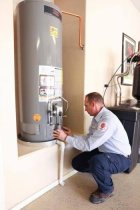
- Isolate the Water Heater: Turn off the cold water inlet valve on top of the water heater. If the meter leak indicator stops spinning, the leak is located on the hot water distribution side.
Explicit DIY Safety Warnings
Never attempt to jackhammer concrete flooring yourself to expose suspected pipes. Sub-slab environments may contain electrical grounding wires, post-tension steel cables under extreme tension, or active sewer lines. Hitting a post-tension cable with a hammer drill can result in severe structural failure and catastrophic personal injury. Additionally, avoid applying chemical drain cleaners or mechanical snakes into supply lines, as pressurized water lines operate under entirely different physical principles than gravity-fed drainage systems.
Comparing Repair Approaches: Spot Repair vs. Overhead Reroute
When a sub-slab leak is confirmed and accurately pinpointed, property owners must evaluate the most structurally sound and cost-effective repair methodology based on pipe age, material condition, and layout.
| Repair Approach | Operational Mechanism | Best Applied When |
|---|---|---|
| Direct Slab Penetration (Spot Repair) | Cutting through concrete flooring, excavating soil, and splicing in a new section of copper or PEX with soldered/crimp fittings. | The piping system is relatively new, in excellent condition, and the leak is isolated to a single, easily accessible location. |
| Overhead PEX Line Reroute | Abandoning the compromised sub-slab pipe entirely and running a new flexible PEX line through the attic space down to fixture drop-downs. | The home has multiple pinhole leaks, aging copper showing systemic wall thinning, or the leak is located beneath difficult-to-restore flooring surfaces. |
| Whole-Home Repipe | Replacing all original supply distribution piping throughout the structure with modern cross-linked polyethylene (PEX-a or PEX-b). | The entire plumbing infrastructure has reached the end of its service life, experiencing frequent recurring leaks across multiple branch lines. |
In Gilbert homes, overhead PEX reroutes are frequently favored over direct slab spot repairs when copper pipes show widespread pitting. Running cross-linked polyethylene through the attic completely eliminates underground fittings, providing superior expansion capabilities against thermal fluctuations and natural seismic or soil movements.
Frequently Asked Questions About Slab Leaks
Will homeowners insurance cover slab leak detection and repair costs?
Most standard homeowners insurance policies cover the resulting water damage (such as ruined flooring or drywall) caused by a sudden, accidental plumbing leak, but they rarely cover the cost of repairing or replacing the actual pipe itself. Review your specific policy declarations or speak with an insurance agent regarding endorsements for underground service lines.
How quickly can a slab leak cause structural damage to my Gilbert home?
The rate of damage depends entirely on the flow rate of the leak and the soil composition beneath your foundation. A high-pressure pinhole leak can saturate sub-grade soils within days, leading to drywall cracking, baseboard separation, and door frame binding. Early detection via water meter monitoring is critical to preventing major foundational movement.
Can I just turn off the hot water valve and leave the cold water on?
Shutting off the water heater inlet valve isolates the hot water distribution system and can serve as a temporary emergency measure if testing proves the leak is strictly on the hot side. However, this is only a short-term triage step; stagnant water left in a compromised heating tank or partially pressurized lines can cause further system complications.
Why do copper pipes fail under concrete slabs in Arizona?
Copper pipes fail underground due to external soil corrosion, internal mineral pitting caused by hard municipal water chemistry, and constant abrasive friction against concrete or aggregate rock as the ground expands and contracts under extreme desert temperature swings.
How do plumbers test for slab leaks without damaging my floors?
Licensed plumbing technicians utilize electronic acoustic listening devices, thermal imaging cameras, and nitrogen pressure testing kits to isolate and pinpoint underground leaks down to a few square inches, eliminating guesswork and minimizing invasive floor demolition.