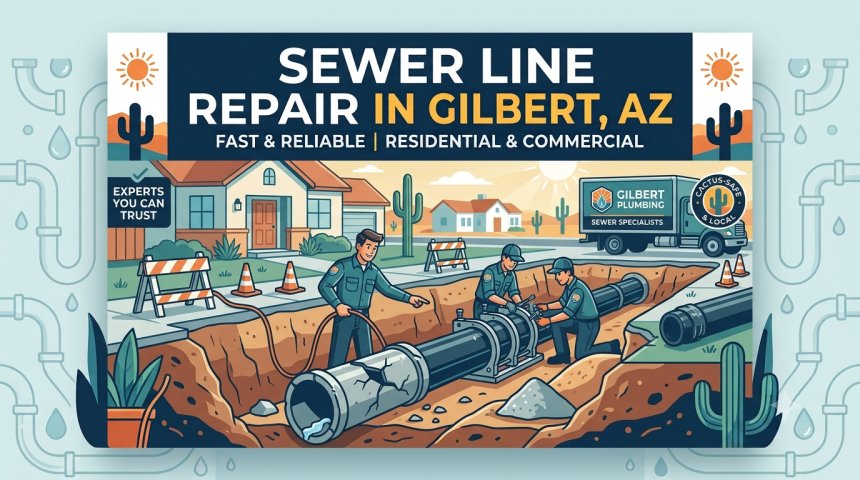
Sewer Line Repair in Gilbert, AZ
A properly functioning sewer line is essential for moving wastewater away from a property safely and efficiently. When the sewer line becomes damaged, clogged, cracked, or structurally compromised, homeowners may notice slow drains, recurring backups, sewage odors, standing water, or problems affecting multiple plumbing fixtures.
Professional sewer line repair in Gilbert, AZ can help identify the cause of the problem and determine whether the sewer line can be repaired or whether replacement is necessary.
Sewer problems should not be ignored. A minor drainage issue can sometimes indicate a deeper problem underground. Addressing warning signs early may help prevent more extensive damage to the plumbing system and surrounding property.
What Is a Sewer Line?
A sewer line is the pipe responsible for carrying wastewater from a home or building toward the appropriate municipal sewer connection or private wastewater system.
The line receives wastewater from toilets, sinks, showers, tubs, washing machines, and other plumbing fixtures.
Because sewer lines are often located underground, problems may not be visible until they begin affecting the property's plumbing.
A professional plumber can inspect the system and determine whether the issue is related to a blockage, pipe damage, root intrusion, deterioration, or another condition.
Signs You May Need Sewer Line Repair
Sewer line problems often produce multiple warning signs.
Slow Drains Throughout the Property
If several sinks, tubs, showers, or other fixtures drain slowly at the same time, the problem may be located in a shared drain or sewer line.
Repeated Sewer Backups
Frequent backups can indicate an obstruction or structural problem within the sewer line.
Sewage Odors
Persistent sewage smells around drains, the yard, or certain areas of the property can indicate a sewer problem.
Gurgling Toilets
Unusual gurgling sounds may occur when wastewater and air are not moving normally through the plumbing system.
Multiple Clogged Fixtures
If several fixtures become clogged without an obvious individual blockage, a main sewer line issue should be considered.
Wet or Unusually Green Areas in the Yard
A damaged underground sewer line may sometimes affect soil moisture or vegetation.
This sign does not automatically prove a sewer leak, but it can justify professional inspection when combined with other symptoms.
Sewage in the Yard
Visible sewage or wastewater around a property requires prompt professional attention.
Common Causes of Sewer Line Damage
Sewer lines can develop problems for several reasons.
Tree Root Intrusion
Roots naturally seek water and may enter small cracks or joints in underground sewer pipes.
As roots grow, they can create increasingly severe restrictions.
Cracked Pipes
Ground movement, aging materials, external pressure, or other factors can contribute to cracks.
Collapsed Pipes
A severely damaged section may collapse and prevent wastewater from flowing normally.
Corrosion and Deterioration
Older pipes may deteriorate over time and become more vulnerable to blockages and structural problems.
Pipe Joint Problems
Separated or damaged joints can affect the integrity of the sewer line.
Grease and Heavy Buildup
Grease, sludge, and other materials can accumulate inside sewer pipes and restrict wastewater flow.
Foreign Objects
Objects that should not enter the plumbing can create serious obstructions.
Sewer Camera Inspection in Gilbert
A sewer camera inspection is one of the most useful methods for evaluating underground sewer pipes.
A specialized camera can be inserted into an accessible section of the sewer system and moved through the pipe.
The inspection may help identify:
-
Cracks
-
Root intrusion
-
Blockages
-
Heavy buildup
-
Misaligned joints
-
Pipe deterioration
-
Collapsed sections
-
Other visible abnormalities
Camera inspection can help the plumber determine whether cleaning is sufficient or whether actual pipe repair is required.
Sewer Cleaning vs. Sewer Line Repair
Sewer cleaning and sewer repair are different services.
Cleaning focuses on removing obstructions or buildup from inside the pipe.
Repair addresses physical damage to the pipe itself.
For example, a sewer line blocked by grease may only require professional cleaning. A cracked or collapsed sewer pipe may require repair or replacement.
A professional inspection helps determine which solution is appropriate.
Traditional Sewer Line Repair
Traditional sewer repair typically involves accessing the damaged section of underground pipe.
Depending on the location and depth of the line, excavation may be required.
The damaged section can then be repaired or replaced.
Traditional repair can be effective, particularly when the problem is localized and excavation is practical.
However, the best repair method depends on the condition, location, accessibility, and material of the existing sewer line.
Trenchless Sewer Repair
Trenchless methods may provide an alternative to extensive excavation in suitable situations.
Depending on the specific pipe condition, trenchless repair techniques can address certain sewer line problems with less surface disturbance than traditional digging.
Potential benefits may include:
-
Reduced excavation
-
Less disruption to landscaping
-
Faster restoration of certain surfaces
-
Potentially shorter project timelines
Not every sewer line qualifies for trenchless repair. A professional assessment is necessary.
Sewer Line Replacement
When a sewer pipe is severely deteriorated or cannot be effectively repaired, replacement may be recommended.
Replacement decisions can depend on:
-
Pipe condition
-
Extent of damage
-
Pipe material
-
Location
-
Accessibility
-
Number of damaged sections
-
Repair feasibility
-
Long-term reliability
A professional plumber can explain whether repair or replacement makes more sense for the property.
Emergency Sewer Line Repair
A sewer emergency can create health, sanitation, and property concerns.
Urgent situations may include:
-
Sewage backing up into the home
-
Sewage overflowing into the yard
-
Multiple toilets and drains backing up
-
Severe wastewater blockage
-
A suspected major sewer pipe break
If sewage is present, avoid direct contact and keep children and pets away from affected areas.
Prompt professional service can help determine the source of the problem and reduce further damage.
Sewer Line Repair for Older Homes
Older homes may contain aging sewer pipes that have experienced years of use.
Depending on the property's age and construction, the plumbing may contain materials that are more susceptible to deterioration, corrosion, root intrusion, or joint problems.
A recurring sewer problem in an older property may therefore require more than simple drain cleaning.
A camera inspection can provide useful information about the condition of the underground line.
How Sewer Line Repair Works
The exact repair process varies from property to property.
Step 1: Initial Assessment
The plumber discusses the symptoms and examines the affected plumbing fixtures.
Step 2: Drain and Sewer Evaluation
The plumber determines whether the problem appears to be localized or associated with the main sewer line.
Step 3: Camera Inspection
If appropriate, a sewer camera can be used to examine the interior of the pipe.
Step 4: Identify the Damage
The inspection may reveal roots, cracks, blockages, collapsed sections, or other problems.
Step 5: Determine Repair Options
The plumber may recommend cleaning, localized repair, trenchless repair, or replacement.
Step 6: Complete the Work
The selected repair method is performed according to the condition and location of the sewer line.
Step 7: Test the System
The sewer line is checked to ensure wastewater is flowing properly.
How Much Does Sewer Line Repair Cost in Gilbert?
Sewer repair costs vary significantly.
Factors can include:
-
Location of the damaged pipe
-
Depth of the sewer line
-
Pipe material
-
Severity of damage
-
Type of repair
-
Need for excavation
-
Camera inspection
-
Root removal
-
Accessibility
-
Surface restoration
-
Emergency service requirements
A small localized repair can have very different costs from a complete sewer replacement.
For an accurate estimate, a professional inspection is generally necessary.
Preventing Sewer Line Problems
Sewer lines cannot be protected from every possible problem, but homeowners can take steps to reduce avoidable risks.
Avoid flushing inappropriate materials.
Do not pour large quantities of grease and cooking oil into drains.
Use strainers where appropriate.
Pay attention to recurring drainage problems.
Address tree root concerns when necessary.
Schedule inspections if the property has a history of sewer problems.
Do not ignore repeated backups.
Why Recurring Drain Problems Matter
A drain that repeatedly becomes clogged may be signaling a larger problem.
If cleaning provides temporary relief but the same symptoms return, the main sewer line should be evaluated.
Repeated blockages can be associated with:
-
Root intrusion
-
Structural damage
-
Heavy buildup
-
Pipe deterioration
-
Misaligned joints
-
Collapsed sections
A camera inspection can help distinguish a simple blockage from a structural sewer problem.
Sewer Line Repair and Property Protection
A sewer problem can affect more than plumbing.
Wastewater backups can damage flooring, walls, cabinets, landscaping, and other property components.
Prompt attention may help limit the duration and extent of the problem.
If sewage has entered the property, professional cleanup may also be necessary after the plumbing issue has been addressed.
Questions to Ask a Sewer Line Repair Professional
Before approving sewer work, homeowners can ask:
-
Where is the sewer problem located?
-
What caused the damage?
-
Was a camera inspection performed?
-
Can the pipe be repaired?
-
Is replacement necessary?
-
Is trenchless repair possible?
-
Will excavation be required?
-
What surfaces may need restoration?
-
What does the estimate include?
-
Is additional work likely?
These questions can make the repair process easier to understand.
Choose Professional Sewer Line Repair in Gilbert, AZ
Sewer line problems can become increasingly disruptive when ignored. Slow drains, repeated backups, sewage odors, gurgling fixtures, and multiple clogged drains should not automatically be treated as ordinary household clogs.
Professional sewer line repair in Gilbert, AZ can help identify whether the problem is caused by roots, blockages, cracks, deterioration, or structural damage.
A qualified plumber can inspect the sewer line and recommend the appropriate solution, whether that involves cleaning, localized repair, trenchless repair, or replacement.
If your property is experiencing repeated sewer problems, arrange a professional inspection before the issue becomes a larger plumbing emergency.