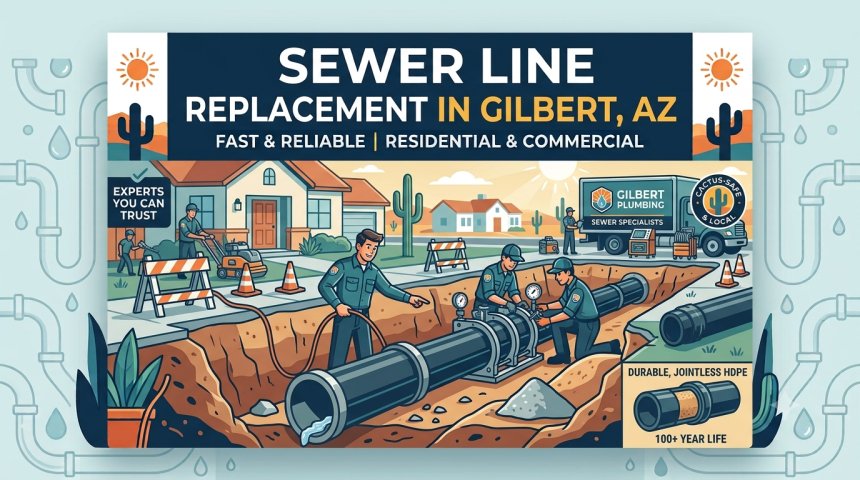
Sewer Line Replacement in Gilbert, AZ
A sewer line is one of the most important parts of a property's plumbing system. It carries wastewater away from toilets, sinks, showers, tubs, washing machines, and other fixtures.
When an underground sewer pipe becomes severely damaged, repeatedly blocked, collapsed, or deteriorated, cleaning may no longer provide a reliable solution. In these situations, professional sewer line replacement in Gilbert, AZ may be considered.
Sewer replacement is a major plumbing project, so homeowners should understand why replacement is being recommended and whether repair is a realistic alternative.
A professional plumber can inspect the existing sewer line, identify the condition of the pipe, explain available options, and determine the most appropriate approach for the property.
What Is Sewer Line Replacement?
Sewer line replacement involves removing or bypassing a damaged sewer pipe and installing a new sewer line or suitable replacement system.
The exact process depends on the pipe's location, material, condition, depth, accessibility, and surrounding property.
Traditional replacement may require excavation to access the existing pipe.
In suitable situations, trenchless methods may reduce the amount of surface excavation required.
The goal is to restore reliable wastewater flow and address structural problems that cannot be permanently resolved through cleaning alone.
When Is Sewer Line Replacement Necessary?
Not every sewer problem requires replacement.
However, replacement may be considered when the existing sewer line has significant structural problems.
Common situations include:
-
Collapsed sewer pipes
-
Severe pipe deterioration
-
Extensive cracking
-
Multiple damaged sections
-
Serious root intrusion
-
Repeated blockages
-
Failed previous repairs
-
Severe corrosion
-
Major separation between pipe sections
-
A pipe that can no longer provide reliable wastewater flow
The final decision should be based on professional inspection and the actual condition of the sewer line.
Warning Signs of a Failing Sewer Line
Homeowners may notice several signs before a sewer line completely fails.
Frequent Drain Backups
Repeated backups may indicate a problem within the main sewer line.
Multiple Slow Drains
When several fixtures become slow at the same time, the issue may be deeper than an individual drain clog.
Repeated Toilet Problems
Toilets that frequently back up or gurgle may indicate a main drainage or sewer issue.
Persistent Sewer Odors
A recurring sewage smell around drains or outside the property can indicate a problem with the sewer system.
Wastewater in Unexpected Locations
Water or wastewater appearing in another fixture when a toilet is flushed can indicate a shared drainage problem.
Wet Areas in the Yard
Unusually wet soil or changes in vegetation may sometimes be associated with an underground leak.
Repeated Professional Drain Cleaning
If the same sewer line repeatedly requires cleaning, the underlying pipe condition should be investigated.
Why Sewer Lines Fail
Several factors can contribute to sewer line deterioration.
Age
Older pipes naturally experience wear over time.
Tree Roots
Roots can enter joints or small cracks and grow inside the pipe.
Ground Movement
Changes in soil conditions can affect underground pipe alignment.
Corrosion
Certain pipe materials can deteriorate over time.
Cracks
Cracks can develop due to age, pressure, movement, or other conditions.
Collapsed Sections
Severely damaged pipe sections can collapse and block wastewater flow.
Improper Installation
In some situations, poor installation or inadequate pipe slope may contribute to drainage problems.
Sewer Camera Inspection Before Replacement
A sewer camera inspection can be extremely useful before making a replacement decision.
The camera allows a plumber to see inside the sewer pipe and identify visible problems.
The inspection may show:
-
Root intrusion
-
Cracks
-
Broken pipe sections
-
Heavy buildup
-
Collapsed areas
-
Misaligned joints
-
Deteriorated pipe
-
Other structural abnormalities
A camera inspection can help determine whether replacement is justified or whether repair or cleaning may be sufficient.
Sewer Repair vs. Sewer Replacement
Replacement is not always the first option.
If the sewer line has one localized damaged section and the rest of the pipe is in good condition, a repair may be possible.
Replacement may become more appropriate when damage is widespread or the pipe has reached a condition where continued repairs are unlikely to provide dependable results.
A plumber should explain why replacement is being recommended and whether alternative solutions are available.
Traditional Sewer Line Replacement
Traditional sewer replacement involves excavating the ground to access the existing sewer line.
The damaged pipe is removed or exposed, and a new pipe is installed.
One advantage of traditional replacement is direct access to the pipe.
However, excavation can disturb landscaping, driveways, patios, walkways, or other surfaces depending on where the sewer line is located.
The amount of excavation depends on the property's layout and the depth and path of the sewer line.
Trenchless Sewer Line Replacement
Trenchless sewer replacement can reduce the need for extensive excavation in suitable situations.
Instead of opening a large trench along the entire sewer line, specialized equipment may be used through limited access points.
Potential advantages may include:
-
Less disruption to landscaping
-
Reduced excavation
-
Potentially shorter restoration requirements
-
Less disturbance to certain hard surfaces
Trenchless methods are not appropriate for every property or every type of sewer damage.
A professional evaluation is required to determine whether this approach is feasible.
Sewer Pipe Materials
Sewer lines can be made from different materials depending on the age and construction of the property.
The existing pipe material can influence the inspection, repair, and replacement process.
A plumber may evaluate the condition and compatibility of the existing system before recommending a replacement material.
The right material and installation method should be selected according to applicable plumbing requirements and the specific property.
Sewer Line Replacement Process
Although projects vary, the replacement process may include several stages.
1. Initial Inspection
The plumber evaluates the symptoms and reviews the property's drainage history.
2. Camera Inspection
A sewer camera may be used to identify the location and extent of the damage.
3. Determine Replacement Feasibility
The plumber assesses access, pipe condition, depth, and surrounding structures.
4. Select Replacement Method
Traditional excavation or a suitable trenchless method may be considered.
5. Remove or Bypass the Damaged Pipe
The selected method is used to address the existing sewer line.
6. Install the New Sewer Line
The replacement pipe is installed according to the project requirements.
7. Test the System
Water flow and drainage are tested to confirm proper operation.
8. Restore the Work Area
If excavation was required, the affected surface may need to be restored.
How Long Does Sewer Replacement Take?
Project duration varies based on factors such as:
-
Length of the sewer line
-
Depth of the pipe
-
Soil conditions
-
Access to the line
-
Type of replacement method
-
Number of damaged sections
-
Landscaping or hardscape restoration
-
Permitting or inspection requirements
A professional plumber can provide a project-specific timeline after evaluating the property.
How Much Does Sewer Line Replacement Cost?
Sewer replacement costs vary significantly from one property to another.
Factors may include:
-
Total pipe length
-
Pipe depth
-
Replacement method
-
Pipe material
-
Accessibility
-
Excavation requirements
-
Soil conditions
-
Root removal
-
Surface restoration
-
Permitting and inspection requirements
-
Emergency conditions
Traditional excavation and trenchless replacement can have different cost structures.
Homeowners should request a detailed estimate explaining the proposed work and what is included.
Why Cheap Sewer Replacement Can Be Risky
A sewer replacement project involves underground infrastructure that is expected to operate for many years.
Choosing a contractor solely because of the lowest initial price can sometimes create concerns if the scope of work, materials, installation practices, or restoration requirements are unclear.
Before approving work, homeowners should understand:
-
What pipe will be installed?
-
How much pipe will be replaced?
-
What installation method will be used?
-
Will excavation be required?
-
What restoration is included?
-
Are inspections or permits required?
-
Is there any workmanship coverage?
-
What additional conditions could change the estimate?
Sewer Replacement for Older Homes
Older properties may have sewer lines that have experienced decades of use.
If an older sewer line is repeatedly failing, replacement may provide a more comprehensive solution than repeated localized repairs.
However, replacement should still be based on actual pipe condition rather than property age alone.
A sewer camera inspection can provide evidence about the condition of the existing line.
Tree Roots and Sewer Replacement
Tree roots can be a significant source of sewer problems.
Small roots may enter through joints or cracks and expand inside the pipe.
If root intrusion is extensive and the pipe is structurally compromised, repeated root removal may only provide temporary relief.
Depending on the condition of the sewer line, repair or replacement may be considered.
Emergency Sewer Replacement
A completely collapsed sewer line or major sewage failure can create an urgent situation.
Signs of a serious emergency may include:
-
Sewage entering the home
-
Major wastewater backup
-
A failed main sewer line
-
Severe outdoor sewage discharge
-
Multiple fixtures becoming unusable
Homeowners should avoid unnecessary contact with sewage and arrange professional plumbing service as soon as possible.
What Happens During Trenchless Replacement?
Trenchless sewer replacement methods vary.
Depending on the system and site conditions, specialized equipment may be used to access and replace or rehabilitate the existing sewer line through limited openings.
The suitability of trenchless work depends on factors such as:
-
Existing pipe condition
-
Pipe alignment
-
Access points
-
Diameter
-
Length
-
Surrounding structures
-
Soil conditions
A professional plumber can determine whether trenchless replacement is practical.
Sewer Line Replacement and Landscaping
One of the major considerations in traditional sewer replacement is surface disruption.
A sewer line may run beneath:
-
Lawns
-
Driveways
-
Walkways
-
Patios
-
Landscaping
-
Other outdoor areas
Excavation may disturb these surfaces.
Homeowners should ask the contractor what restoration is included and whether landscaping or hardscape repairs are part of the project.
Maintaining a New Sewer Line
After replacement, proper maintenance can help keep the sewer system functioning effectively.
Avoid flushing inappropriate materials.
Do not pour grease and large quantities of oil into drains.
Use appropriate drain screens where needed.
Address slow drainage promptly.
Monitor recurring odors or backups.
Have the sewer line inspected if unusual symptoms develop.
Keep records of major plumbing work for future maintenance.
Common Mistakes Homeowners Make
Ignoring Repeated Backups
Repeated backups should not be treated as normal.
Assuming Drain Cleaning Solves Everything
Cleaning may remove a blockage without fixing a damaged pipe.
Waiting for Complete Failure
A failing sewer line can sometimes be identified before a total collapse.
Skipping Inspection
A professional camera inspection can provide useful information before major work is approved.
Choosing a Contractor Without Reviewing the Scope
Homeowners should understand what the replacement estimate includes.
Questions to Ask Before Sewer Replacement
Before signing a sewer replacement agreement, consider asking:
-
Why is replacement necessary?
-
Was the sewer line inspected with a camera?
-
How extensive is the damage?
-
Can the pipe be repaired instead?
-
Is trenchless replacement possible?
-
How long will the project take?
-
Will excavation be required?
-
What restoration is included?
-
Are permits or inspections required?
-
What pipe material will be installed?
-
What happens if unexpected damage is discovered?
Benefits of Professional Sewer Line Replacement
When replacement is genuinely necessary, a professionally installed new sewer line can provide a more dependable wastewater pathway.
It may eliminate recurring problems associated with severely damaged sections and reduce the need for repeated emergency drain cleaning.
The exact benefits depend on the property's existing plumbing condition and the quality of the replacement work.
Choosing a Gilbert Sewer Line Replacement Professional
Homeowners should look for a plumbing professional with experience in sewer inspection, repair, replacement, and appropriate underground plumbing methods.
A reliable contractor should be able to explain the condition of the existing pipe, provide a clear scope of work, discuss available options, and answer questions about the project.
Clear communication is particularly important for a major underground plumbing project.
Final Thoughts on Sewer Line Replacement in Gilbert, AZ
Sewer line replacement is a major plumbing decision, but it can become necessary when an underground sewer pipe has severe structural damage, repeated failures, extensive root intrusion, or a collapsed section.
The first step is usually understanding exactly what is wrong with the existing sewer line.
Professional inspection, including sewer camera inspection when appropriate, can help determine whether cleaning, repair, trenchless rehabilitation, or complete replacement is the best solution.
If your Gilbert property is experiencing repeated sewer backups, multiple slow drains, persistent sewage odors, or evidence of underground sewer damage, contact a qualified plumbing professional for an evaluation.
Professional sewer line replacement in Gilbert, AZ can help restore dependable wastewater flow and address serious underground pipe problems with a solution suited to the property's specific conditions.