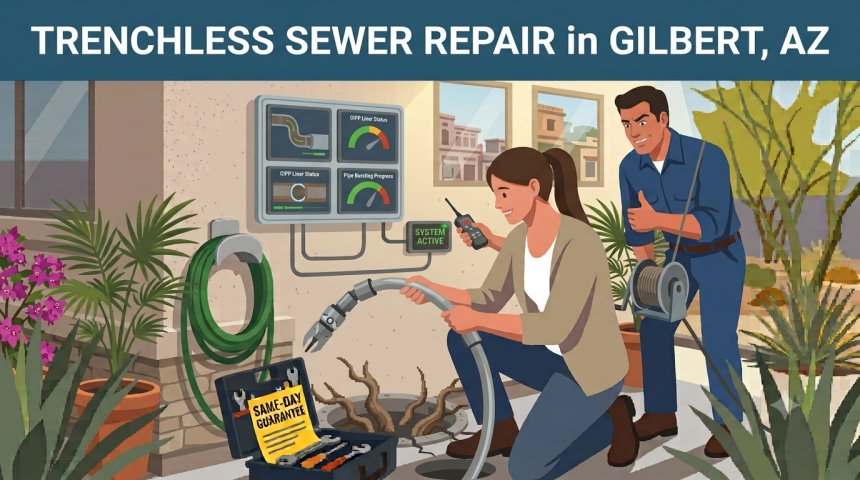
Trenchless Sewer Repair in Gilbert, AZ
A damaged sewer line can create serious drainage problems and may eventually require repair or replacement. Traditional sewer replacement often involves excavation across part of the property to access the damaged pipe. Depending on the location and condition of the sewer line, trenchless sewer repair can provide an alternative approach that may reduce the amount of surface excavation required.
Professional trenchless sewer repair in Gilbert, AZ begins with determining whether the existing sewer line and property conditions are suitable for a trenchless method. Not every sewer problem can be solved with trenchless technology.
A sewer camera inspection and other diagnostic methods can help determine the location, extent, and type of damage.
What Is Trenchless Sewer Repair?
Trenchless sewer repair refers to sewer repair or replacement methods designed to reduce the need for continuous open trenches across the property.
Depending on the system and condition of the pipe, trenchless work may involve:
- Pipe lining
- Pipe bursting
- Limited excavation
- Existing access points
- Specialized installation equipment
The specific method depends on the condition and layout of the sewer system.
Why Sewer Lines Need Repair
Sewer lines can develop problems for several reasons.
Potential causes include:
- Age
- Corrosion
- Cracks
- Root intrusion
- Separated joints
- Pipe collapse
- Ground movement
- Improper installation
- Heavy buildup
- Structural deterioration
Some sewer problems begin with slow drainage and gradually become more serious.
Signs You May Need Sewer Repair
Warning signs can include:
- Repeated sewer backups
- Multiple slow drains
- Persistent sewer odors
- Frequent toilet clogs
- Gurgling drains
- Wastewater pooling
- Recurring root intrusion
- Drainage problems that continue after cleaning
- Unexplained wet areas
- Repeated sewer cleaning requirements
These symptoms do not automatically mean the sewer line needs replacement. Professional diagnosis is important.
Sewer Camera Inspection Before Trenchless Repair
A sewer camera inspection can help determine what is happening inside the pipe.
The camera may identify:
- Cracks
- Root intrusion
- Open joints
- Pipe offsets
- Blockages
- Collapsed sections
- Heavy buildup
- Structural deterioration
The inspection can help determine whether trenchless repair is technically appropriate.
Trenchless Pipe Lining
Pipe lining is one type of trenchless sewer rehabilitation.
A lining material is installed inside the existing pipe to create a new pipe-like layer within the existing pathway.
Depending on the system and pipe condition, lining can address certain cracks, leaks, and structural problems.
However, the existing pipe must meet specific requirements for lining to be appropriate.
Pipe Bursting
Pipe bursting is another trenchless method used in some sewer replacement projects.
It generally involves using specialized equipment to break apart or displace the existing pipe while installing a new pipe along the same general pathway.
This method may be considered when the existing sewer line is severely damaged and the property conditions allow the installation.
Benefits of Trenchless Sewer Repair
Potential benefits may include:
- Less surface excavation
- Reduced disturbance to landscaping
- Less disruption to driveways or hardscaping
- Shorter restoration requirements in suitable situations
- Access to difficult sewer routes
- Potentially reduced property disruption
The actual benefits depend on the project, property, sewer condition, and selected method.
Traditional Sewer Repair vs. Trenchless Repair
Traditional sewer repair generally involves excavating the area above the damaged pipe.
Trenchless methods are designed to minimize excavation.
Traditional excavation may still be the better choice when:
- The pipe is extremely shallow or accessible
- A large section requires direct reconstruction
- Property conditions prevent trenchless installation
- Existing infrastructure creates complications
- The sewer route does not support the selected trenchless method
A professional evaluation can compare available options.
Trenchless Sewer Repair Process
The process may include several stages.
1. Sewer Inspection
A camera inspection can help identify the problem.
2. Locate the Sewer Line
The sewer pathway and damaged section are identified.
3. Determine Repair Method
The plumber evaluates whether lining, bursting, spot repair, or traditional excavation is appropriate.
4. Prepare Access Points
Required access points are established.
5. Perform the Repair
Specialized equipment is used to complete the selected trenchless procedure.
6. Test the Sewer
The repaired line is evaluated to confirm appropriate flow.
7. Final Inspection
A camera may be used again to inspect the finished work.
When Trenchless Repair May Not Be Appropriate
Trenchless repair is not a universal solution.
It may not be suitable when:
- The sewer pathway is inaccessible
- The existing pipe condition is unsuitable
- The pipe has collapsed extensively
- The diameter or configuration creates limitations
- The property has other underground conflicts
- Required access points cannot be established
- Local project conditions prevent the method
A professional inspection should be performed before selecting a trenchless solution.
Trenchless Sewer Repair for Root Damage
Root intrusion can sometimes be treated through trenchless rehabilitation when the pipe condition and root problem are suitable.
The process may involve:
- Removing existing roots
- Cleaning the pipe
- Inspecting the pipe
- Repairing or lining the affected section
- Testing the sewer line
The objective is not simply to remove the roots but to address the pipe condition that allowed the roots to enter.
Trenchless Repair for Cracked Sewer Pipes
Cracks can allow wastewater to escape and roots to enter.
Depending on the severity and location of the cracks, trenchless lining or another repair method may be considered.
The exact solution should be based on camera inspection and the structural condition of the pipe.
Trenchless Sewer Replacement
When an existing sewer line is beyond practical repair, trenchless replacement may be considered.
Pipe bursting can sometimes replace the existing pipe while minimizing surface excavation.
However, replacement requirements vary by property and sewer configuration.
Benefits for Landscaping and Hardscaping
One major reason property owners consider trenchless methods is the potential to reduce disturbance to the surface.
Traditional excavation may affect:
- Lawns
- Landscaping
- Driveways
- Walkways
- Patios
- Decorative areas
A trenchless approach may reduce the amount of restoration required, although some excavation and surface access may still be necessary.
Trenchless Repair for Residential Properties
Residential sewer lines can pass beneath driveways, landscaping, patios, and other areas where excavation can be disruptive.
Trenchless options may provide an alternative when the property and sewer line meet the necessary conditions.
Commercial Trenchless Sewer Repair
Commercial properties may also benefit from reduced surface disruption because excavation can interfere with parking areas, entrances, landscaping, and business operations.
The feasibility of trenchless work depends on the property's sewer configuration and structural conditions.
Cost Factors
Trenchless sewer repair costs vary depending on:
- Sewer line length
- Pipe diameter
- Damage severity
- Repair method
- Access requirements
- Soil and property conditions
- Existing underground utilities
- Camera inspection
- Required restoration
- Whether repair or replacement is needed
Although reduced excavation can lower certain restoration requirements, trenchless work involves specialized equipment and materials.
Maintenance After Trenchless Sewer Repair
After repair, homeowners should continue normal sewer maintenance practices.
These may include:
- Avoiding inappropriate items in drains
- Keeping grease out of drainage systems
- Monitoring recurring clogs
- Scheduling inspections when appropriate
- Addressing root intrusion
- Watching for sewer odors
- Responding to drainage changes promptly
Proper maintenance can help protect the repaired sewer system.
Frequently Asked Questions
What is trenchless sewer repair?
Trenchless sewer repair uses specialized techniques designed to repair or replace sewer pipes while reducing the need for extensive surface excavation.
Is trenchless sewer repair completely excavation-free?
Not always. Many trenchless methods require access points or limited excavation to perform the work.
Is trenchless repair better than traditional sewer replacement?
It depends on the property and pipe condition. Trenchless repair may reduce surface disruption, but traditional excavation can be more appropriate for certain projects.
Can trenchless repair fix root intrusion?
It can sometimes address the underlying pipe condition after roots are removed, depending on the type and extent of damage.
How do I know if my sewer line qualifies for trenchless repair?
A sewer camera inspection and property evaluation can help determine whether trenchless methods are technically appropriate.
Does trenchless sewer repair last?
The expected service life depends on the selected method, materials, installation quality, existing pipe condition, and other factors.
Conclusion
Sewer line damage can create recurring backups, slow drainage, odors, and costly property disruption. Trenchless sewer repair in Gilbert, AZ provides a potential alternative to extensive traditional excavation for suitable sewer systems.
A professional sewer camera inspection is an important first step. Once the location and condition of the problem are understood, a plumber can determine whether trenchless lining, pipe bursting, spot repair, traditional excavation, or another solution is appropriate.