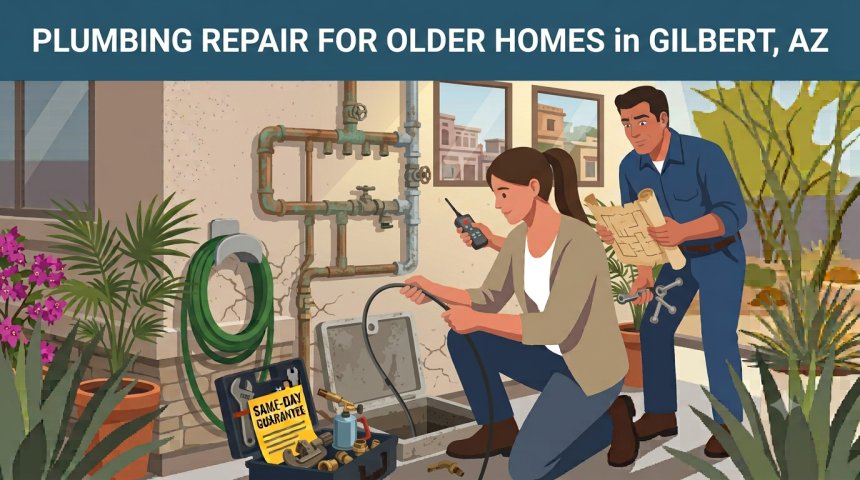
Plumbing Repair for Older Homes in Gilbert, AZ
Older homes can have plumbing systems that require different maintenance and repair considerations than newer construction. Over time, pipes, valves, fixtures, drains, water heaters, and sewer lines can experience wear, corrosion, mineral buildup, leaks, or other forms of deterioration.
When an older home develops recurring plumbing problems, repairing the individual symptom may not always be enough. Professional plumbing repair for older homes in Gilbert, AZ can help identify both immediate problems and broader plumbing conditions that may require attention.
The age of a home alone does not determine whether its plumbing needs replacement. The condition, material, installation history, maintenance, and performance of the system are more important factors.
Common Plumbing Problems in Older Homes
Older properties may experience:
-
Leaking pipes
-
Corroded plumbing
-
Low water pressure
-
Repeated drain clogs
-
Sewer line problems
-
Aging water heaters
-
Leaking faucets
-
Faulty shutoff valves
-
Outdated fixtures
-
Poor drainage
-
Pipe deterioration
-
Hidden water leaks
-
Frequent repairs
Some problems are isolated, while others may indicate that several plumbing components are reaching the end of their useful service life.
Aging Pipes
Pipes can deteriorate for different reasons depending on their material, installation, water conditions, and environment.
Signs of aging plumbing may include:
-
Frequent leaks
-
Discolored water
-
Reduced water pressure
-
Visible corrosion
-
Damp areas
-
Repeated repairs
-
Unusual plumbing noises
A professional inspection can help determine whether a problem is limited to one pipe or affects a larger section of the system.
Pipe Corrosion
Corrosion can weaken plumbing components and eventually cause leaks.
Visible signs may include:
-
Rust-like deposits
-
Discoloration
-
Pitting
-
Flaking material
-
Leaks around connections
If corrosion is widespread, repeatedly repairing individual leaks may not be the most practical long-term solution.
Low Water Pressure in Older Homes
Low water pressure can have multiple causes.
Potential causes include:
-
Corroded pipes
-
Mineral buildup
-
Partially closed valves
-
Faulty pressure-regulating components
-
Supply line restrictions
-
Leaks
-
Fixture-specific problems
If pressure is low throughout the house, a broader plumbing inspection may be necessary.
Recurring Drain Clogs
Older drainage systems can experience repeated blockages due to buildup, pipe deterioration, improper slope, root intrusion, or other issues.
If the same drain becomes clogged repeatedly, simply clearing the blockage may not solve the underlying problem.
A camera inspection can sometimes provide information about the interior condition of the drain or sewer line.
Sewer Line Problems in Older Homes
Sewer lines can deteriorate over time and may experience:
-
Root intrusion
-
Cracks
-
Separated joints
-
Blockages
-
Collapsed sections
-
Heavy buildup
Signs of sewer trouble include:
-
Multiple slow drains
-
Frequent toilet clogs
-
Sewer odors
-
Gurgling
-
Wastewater backups
-
Repeated professional drain cleaning
Professional sewer inspection can help determine whether the problem is a removable blockage or structural damage.
Plumbing Leak Repair
Leaks in older homes can occur at:
-
Pipe joints
-
Supply lines
-
Valves
-
Faucets
-
Toilets
-
Water heaters
-
Hidden wall plumbing
-
Underground lines
Small leaks should not be ignored. Over time, water can damage cabinets, flooring, drywall, insulation, and other building materials.
Hidden Plumbing Leaks
Some leaks are not visible.
Potential warning signs include:
-
Unexpected increase in water usage
-
Damp walls
-
Water stains
-
Musty smells
-
Peeling paint
-
Wet flooring
-
Sounds of running water
-
Mold-like growth
Professional leak detection can help identify concealed plumbing problems.
Whole-House Repiping
Some older homes may eventually require repiping when the existing plumbing has widespread deterioration.
Repiping may be considered when:
-
Multiple pipes are leaking
-
Corrosion is extensive
-
Water pressure remains poor
-
Repairs are frequent
-
Existing pipe material has deteriorated
-
The plumbing system has reached the end of its practical service life
Repiping involves replacing some or all of the home's water supply piping.
Partial Pipe Replacement
Not every older home needs complete repiping.
If only one section is damaged while the rest of the plumbing remains in good condition, a localized pipe repair or replacement may be appropriate.
The decision should be based on the overall condition of the system.
Water Heater Problems in Older Homes
An older water heater may develop:
-
Leaks
-
Sediment buildup
-
Temperature problems
-
Failed components
-
Pressure issues
-
Corrosion
Repair may be practical for some failures. Replacement may be considered when the unit is severely deteriorated or repeatedly requires repairs.
Old Plumbing Fixtures
Older faucets, toilets, shower valves, and other fixtures may become difficult to repair if replacement components are unavailable.
Replacement may provide:
-
Improved reliability
-
Better water efficiency
-
Updated functionality
-
Easier future maintenance
However, replacing a fixture may also require updating its plumbing connections.
Shutoff Valve Problems
Older shutoff valves can become difficult to operate or may fail to stop water completely.
This can create a problem when a fixture needs repair because the water cannot be isolated easily.
Replacing defective shutoff valves can make future plumbing maintenance more manageable.
Plumbing Inspection for Older Homes
A plumbing inspection can provide useful information about the condition of an older home's system.
An inspection may evaluate:
-
Visible supply pipes
-
Drainage
-
Water pressure
-
Water heater
-
Fixtures
-
Shutoff valves
-
Accessible sewer components
-
Signs of leaks
-
Corrosion
-
Previous repair areas
The exact inspection scope depends on property access and the plumbing systems involved.
Plumbing Inspection Before Buying an Older Home
A plumbing inspection can be particularly valuable before purchasing an older property.
Potential concerns may include:
-
Hidden leaks
-
Aging pipes
-
Sewer damage
-
Water heater condition
-
Low water pressure
-
Drainage problems
-
Outdated fixtures
Identifying major plumbing conditions before purchase can help buyers better understand potential maintenance needs.
Plumbing Repair During Home Remodeling
Bathroom and kitchen remodeling projects can reveal older plumbing components that need attention.
Remodeling may involve:
-
Moving plumbing fixtures
-
Replacing supply lines
-
Updating valves
-
Replacing drainpipes
-
Installing new fixtures
-
Updating water heater connections
Planning plumbing work before walls and floors are closed can help reduce future repair complications.
Older Home Drain Cleaning
Routine drain cleaning may be helpful when an older drainage system develops recurring buildup.
However, frequent clogs should not simply be treated repeatedly without determining why they occur.
A professional can evaluate whether the problem is caused by:
-
Buildup
-
Root intrusion
-
Pipe deterioration
-
Structural damage
-
Improper drainage
Main Water Line Problems
The main water line supplies water to the property and can develop leaks or restrictions.
Possible signs include:
-
Low water pressure
-
Unexpected water usage
-
Wet areas
-
Water pooling
-
Sudden loss of water service
Professional diagnosis can determine whether the issue involves the main line, interior plumbing, or another component.
Older Home Plumbing Maintenance
Preventive maintenance can help identify developing problems before they become major failures.
Helpful practices include:
-
Checking visible pipes
-
Monitoring water pressure
-
Repairing leaks promptly
-
Inspecting the water heater
-
Watching for recurring clogs
-
Testing accessible shutoff valves
-
Scheduling plumbing inspections
-
Monitoring water usage
Repair vs. Repiping
The decision between individual repairs and repiping depends on the condition of the entire plumbing system.
Repair may make sense when:
-
Damage is isolated
-
Most pipes remain in good condition
-
The system performs reliably
-
Replacement would be unnecessary
Repiping may be considered when:
-
Multiple areas are failing
-
Leaks are frequent
-
Corrosion is widespread
-
Water pressure is persistently poor
-
Repairs are becoming increasingly frequent
A professional plumbing assessment can help compare these options.
Cost Factors for Older Home Plumbing Repairs
Costs vary depending on:
-
Plumbing material
-
Number of affected components
-
Accessibility
-
Repair complexity
-
Labor
-
Required parts
-
Pipe location
-
Whether walls or flooring must be opened
-
Whether repiping is required
-
Sewer or underground work
Older homes can sometimes require additional diagnostic work because plumbing may be concealed or difficult to access.
Why Professional Plumbing Service Matters
Older plumbing systems can have hidden conditions that are not obvious from a single visible leak or clog.
Professional service can help determine:
-
Where the problem originates
-
Whether other components are affected
-
Whether repair is practical
-
Whether replacement is necessary
-
Whether the issue is likely to recur
This approach can help property owners make informed decisions instead of repeatedly repairing the same symptom.
Frequently Asked Questions
Do older homes always need new plumbing?
No. The age of a home does not automatically mean the entire plumbing system needs replacement. The condition and performance of the plumbing should be evaluated.
How do I know if my older home needs repiping?
Frequent leaks, widespread corrosion, persistent low pressure, and repeated plumbing failures may indicate that a larger plumbing evaluation is appropriate.
Can old pipes cause low water pressure?
Yes. Corrosion, mineral buildup, restrictions, valves, leaks, and other conditions can contribute to low pressure.
Should I inspect plumbing before buying an older home?
A plumbing inspection can help identify potential leaks, pipe deterioration, water heater problems, sewer issues, and other conditions before purchase.
Why do older homes have recurring drain clogs?
Recurring clogs may result from buildup, deteriorated pipes, roots, drainage problems, or structural issues. Professional inspection can help determine the cause.
Can older plumbing fixtures be repaired?
Many can, depending on their condition and availability of replacement components. Severely deteriorated or outdated fixtures may be better candidates for replacement.
Is repiping better than repeated repairs?
It depends on the condition of the plumbing system. If problems are widespread, repiping may provide a more comprehensive solution than repeatedly repairing individual leaks.
Conclusion
Older homes can have unique plumbing maintenance and repair needs. Plumbing repair for older homes in Gilbert, AZ can address leaks, aging pipes, low water pressure, recurring drain clogs, sewer problems, water heater issues, faulty valves, and other plumbing concerns.
The goal should not simply be to repair the visible symptom. A professional evaluation can help determine whether the problem is isolated or part of a larger plumbing condition. With appropriate inspection, maintenance, repair, or repiping when necessary, older homes can continue to have reliable plumbing systems.