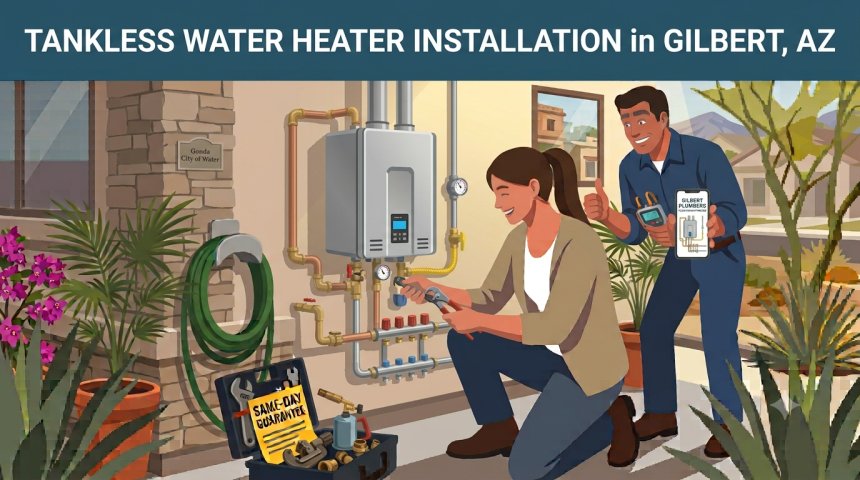
Tankless Water Heater Installation in Gilbert, AZ
A reliable supply of hot water is important for showers, laundry, dishwashing, cleaning, and everyday household activities. Traditional storage water heaters keep a quantity of hot water inside a tank, while a tankless water heater heats water as it passes through the system.
For homeowners interested in on-demand hot water and a different approach to water heating, professional tankless water heater installation in Gilbert, AZ can be an option worth considering.
However, installing a tankless system is not simply a matter of replacing one water heater with another. The property's hot water demand, plumbing configuration, gas or electrical capacity, water flow, installation location, and other requirements need to be evaluated before choosing a system.
A professional plumber can assess the existing water heater and determine whether a tankless system is suitable for the property.
What Is a Tankless Water Heater?
A tankless water heater, also known as an on-demand water heater, heats water when it is needed instead of storing a large volume of hot water in a tank.
When a hot water fixture is opened, the system detects water flow and activates the heating process.
The heated water then travels to the fixture.
Because the system does not continuously maintain a large tank of stored hot water, its operation differs from a conventional storage water heater.
How Does a Tankless Water Heater Work?
When someone opens a hot water faucet or starts a shower, cold water enters the tankless unit.
A flow sensor detects the demand.
Depending on the system, a gas burner or electrical heating elements then heat the water as it passes through the unit.
The heated water is delivered to the plumbing fixtures.
The exact operation varies by model and fuel type.
Signs Your Home May Benefit From a Tankless System
A tankless water heater may be worth considering if:
-
You frequently run out of hot water.
-
You want on-demand hot water.
-
You have limited space for a large tank.
-
You are replacing an aging water heater.
-
You are planning a major plumbing upgrade.
-
Your household has changing hot water needs.
However, suitability depends on the property's plumbing and energy infrastructure.
Tankless vs. Traditional Water Heater
The two systems have different designs.
A traditional tank water heater stores heated water in a tank.
A tankless system heats water when demand occurs.
Tank systems may be familiar and straightforward to replace.
Tankless systems can provide on-demand heating and occupy less physical space, but they can have different installation requirements.
The best choice depends on household demand, budget, available utilities, installation conditions, and homeowner preferences.
Benefits of Tankless Water Heater Installation
On-Demand Hot Water
Tankless systems heat water when needed.
Compact Design
Tankless units are generally smaller than traditional storage tanks.
No Large Storage Tank
The system does not require a large tank to store heated water.
Potential Energy Advantages
Because tankless systems do not continuously maintain a large tank of stored hot water, they can reduce certain standby losses compared with conventional systems.
Actual energy performance depends on usage, equipment, installation, and utility conditions.
Long-Term Use
A properly installed and maintained tankless system can provide reliable service.
Choosing the Right Tankless Water Heater
Selecting the correct unit is important.
A plumber may consider:
-
Number of occupants
-
Number of bathrooms
-
Shower usage
-
Kitchen demand
-
Laundry requirements
-
Simultaneous hot water use
-
Incoming water temperature
-
Required flow rate
-
Gas or electrical capacity
A system should be selected based on actual demand rather than simply choosing the largest model.
Gas Tankless Water Heater Installation
Gas tankless systems use a burner to heat water.
Installation may involve considerations such as:
-
Gas supply capacity
-
Gas line requirements
-
Venting
-
Combustion air
-
Unit location
-
Clearances
-
Condensate management for applicable models
Gas installation should be performed by an appropriately qualified professional.
Electric Tankless Water Heater Installation
Electric tankless systems use electrical heating elements.
Depending on the model, they may require significant electrical capacity.
Before installation, a professional should evaluate the home's electrical service and determine whether the existing system can support the selected unit.
Electrical modifications should be performed by qualified professionals.
Tankless Water Heater Installation Process
Step 1: Evaluate the Existing Water Heater
The plumber examines the current system and available connections.
Step 2: Determine Hot Water Demand
Household usage is considered to determine the appropriate system capacity.
Step 3: Evaluate Utilities
Gas supply or electrical service is assessed depending on the selected system.
Step 4: Select the Unit
A suitable tankless water heater is chosen based on demand and installation requirements.
Step 5: Prepare the Installation Location
The area is prepared according to manufacturer requirements.
Step 6: Install Plumbing Connections
Water lines are connected appropriately.
Step 7: Complete Gas, Electrical, and Venting Work
Applicable utility and venting connections are completed professionally.
Step 8: Test the System
The unit is tested for proper operation and hot water delivery.
Does a Tankless Water Heater Need Maintenance?
Yes. Tankless systems can benefit from appropriate maintenance.
Minerals can accumulate inside the heat exchanger, particularly depending on water conditions.
Periodic flushing or descaling may be recommended according to the manufacturer's instructions and local conditions.
Maintenance requirements vary by model.
Water Quality and Tankless Systems
Water quality can affect tankless water heater performance.
Mineral deposits can accumulate inside the heat exchanger and reduce efficiency or affect water flow.
If a property has significant mineral buildup, a plumber may recommend appropriate water treatment or maintenance.
Tankless Water Heater and Water Flow
Tankless systems require a certain minimum flow to activate correctly.
If the flow is too low, the unit may not activate or may operate differently.
Proper sizing and installation help ensure that the system matches the property's normal usage.
What Is Temperature Rise?
Temperature rise refers to the difference between incoming cold water temperature and the desired hot water temperature.
Tankless systems must heat incoming water to the desired temperature as it passes through the unit.
The required temperature rise affects the amount of water the system can heat at a given time.
A professional can consider these factors when selecting a suitable unit.
Can a Tankless Water Heater Supply Multiple Fixtures?
A tankless system can serve multiple fixtures, but capacity matters.
If several showers, faucets, appliances, or other hot water fixtures operate simultaneously, the system needs sufficient capacity to handle the combined demand.
Correct sizing is therefore one of the most important parts of installation.
Tankless Water Heater Installation Cost in Gilbert
Installation costs vary depending on the project.
Factors may include:
-
Unit type
-
Unit capacity
-
Gas or electric configuration
-
Existing plumbing
-
Gas line modifications
-
Electrical upgrades
-
Venting requirements
-
Installation location
-
Water treatment needs
-
Removal of the existing water heater
A simple replacement may have very different requirements from a complete conversion from a tank system to a tankless system.
A professional estimate should clearly explain the installation scope.
Tank-to-Tankless Conversion
Replacing a conventional tank water heater with a tankless model can involve additional work.
The existing plumbing may need modification.
Gas or electrical capacity may need evaluation.
Venting may need to be changed for applicable gas models.
The installation location may also require adjustment.
A professional assessment can determine whether the conversion is practical.
Tankless Water Heater Installation for New Construction
Tankless systems can also be considered during new construction or major remodeling.
Planning the system early can make it easier to design appropriate plumbing, electrical, gas, and installation arrangements.
Common Tankless Installation Mistakes
Choosing an Undersized Unit
An undersized system may struggle during periods of high demand.
Ignoring Electrical Requirements
Electric systems can require substantial electrical capacity.
Ignoring Gas Capacity
Gas units need an appropriate gas supply.
Improper Venting
Gas tankless systems require proper venting according to the equipment design and applicable requirements.
Skipping Maintenance
Mineral buildup can affect performance.
Installing Without Evaluating Water Flow
Flow requirements should be considered during selection.
Tankless Water Heater Safety
Tankless systems involve hot water and, depending on the model, gas or electricity.
Installation and repairs should be handled by qualified professionals.
Gas connections, electrical components, venting, and safety controls should not be modified casually.
When to Replace a Tankless Water Heater
A tankless unit may eventually require replacement if it experiences severe deterioration, repeated major failures, or becomes impractical to repair.
Before replacement, a professional can determine whether cleaning, descaling, component replacement, or other maintenance could restore performance.
Questions to Ask a Tankless Water Heater Installer
Before installation, homeowners can ask:
-
What size tankless system do I need?
-
Will my existing gas or electrical service support it?
-
Will plumbing need modification?
-
Is new venting required?
-
What maintenance does the unit need?
-
Is water treatment recommended?
-
What is included in installation?
-
What happens to the existing water heater?
-
How will simultaneous hot water demand be handled?
Maintaining Your Tankless Water Heater
Follow manufacturer recommendations.
Schedule professional maintenance when appropriate.
Watch for unusual temperature changes.
Monitor water flow.
Address error codes promptly.
Have mineral buildup evaluated.
Do not ignore leaks or unusual sounds.
Professional Tankless Water Heater Installation in Gilbert, AZ
A tankless water heater can be a practical option for homeowners seeking on-demand hot water and a compact system.
However, the success of the installation depends heavily on selecting the correct system and ensuring that the home's plumbing, gas, electrical, and water conditions are suitable.
Professional tankless water heater installation in Gilbert, AZ can help homeowners evaluate their options, choose an appropriately sized system, complete the required connections, and test the new unit.
If you are considering replacing an aging water heater with a tankless system, arrange a professional evaluation before purchasing equipment.