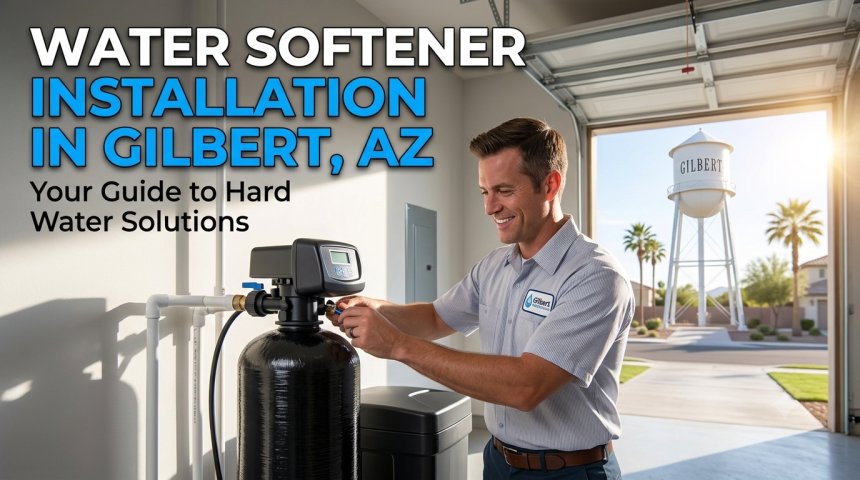
Water Softener Installation in Gilbert, AZ
Hard water can affect many parts of a home's plumbing system. Minerals present in water can leave scale on fixtures, create spots on dishes, affect water-using appliances, and make cleaning more difficult. If your home is experiencing ongoing hard-water-related issues, a properly selected and installed water softener can help manage mineral content throughout the household water supply.
Professional water softener installation in Gilbert, AZ involves more than simply connecting a softener to the water line. The plumbing layout, household water usage, available installation space, drainage requirements, equipment capacity, and existing water treatment equipment should all be considered before installation.
A properly installed system can provide treated water to the appropriate fixtures while allowing homeowners to maintain the equipment according to manufacturer requirements.
What Is a Water Softener?
A water softener is a water-treatment system designed primarily to reduce hardness minerals from water. Traditional ion-exchange softeners use resin media to exchange hardness ions with sodium or another suitable ion.
A typical system may include:
-
Mineral or resin tank
-
Brine tank
-
Control valve
-
Inlet and outlet connections
-
Drain connection
-
Bypass valve
-
Brine line
-
Electrical connection where required
The exact design varies depending on the equipment selected.
Signs Your Home May Need a Water Softener
Hard water can produce several noticeable symptoms around the home.
Common signs include:
-
White mineral deposits on faucets
-
Scale around showerheads
-
Spots on dishes and glassware
-
Soap that does not lather easily
-
Dry-feeling skin
-
Mineral buildup around fixtures
-
Scale inside water-using appliances
-
Frequent cleaning of bathroom fixtures
-
Dull-looking dishes after washing
These symptoms do not automatically prove that a water softener is required. Water testing can help determine the actual characteristics of the home's water.
Benefits of Water Softener Installation
A properly selected water softener may provide several household benefits.
Reduced Mineral Scale
Hardness minerals can accumulate on plumbing fixtures and surfaces. Softening the water can help reduce this type of buildup.
Easier Cleaning
Softened water can make soaps and cleaning products work differently, potentially reducing the amount of mineral residue left behind.
Protection for Water-Using Appliances
Water heaters, washing machines, dishwashers, and other appliances that regularly use water can be affected by mineral buildup. Managing water hardness may help reduce scale accumulation.
Better Fixture Appearance
Mineral deposits can make faucets and shower fixtures look dull or stained. Reducing hardness can help minimize this type of residue.
Whole-House Water Softener Installation
A whole-house system is installed on the home's water supply so that treated water can be distributed to multiple fixtures.
Depending on the home's plumbing configuration, installation may involve:
-
Identifying the main water entry point.
-
Determining where the softener should be installed.
-
Checking available drainage.
-
Measuring available space.
-
Installing appropriate shut-off and bypass components.
-
Connecting the inlet and outlet plumbing.
-
Connecting the drain line.
-
Connecting the brine system.
-
Programming the control valve.
-
Testing the system.
The exact installation procedure depends on the equipment and plumbing configuration.
Choosing the Right Water Softener
Water softeners are available in different capacities and configurations. Selecting the right unit is important because an undersized system may not adequately handle household demand, while an unnecessarily large system may increase equipment and operating costs.
Factors to consider include:
-
Household size
-
Number of bathrooms
-
Water usage
-
Water hardness
-
Flow requirements
-
Regeneration requirements
-
Available installation space
-
Drainage location
-
Manufacturer specifications
A professional can evaluate these factors before recommending equipment.
Water Softener Installation Process
Step 1: Water Assessment
The first step may involve testing or evaluating the home's water characteristics.
Step 2: Plumbing Inspection
The existing water line and installation location are checked to determine how the equipment can be connected.
Step 3: Equipment Selection
The appropriate capacity and configuration are selected based on household requirements.
Step 4: Installation
The plumber installs the softener and required plumbing connections.
Step 5: Drain and Brine Connections
The system's regeneration and brine components are connected according to manufacturer requirements.
Step 6: System Programming
Settings such as regeneration frequency and other operational parameters may be configured.
Step 7: Testing
The system is checked for leaks, proper water flow, and correct operation.
Where Should a Water Softener Be Installed?
A water softener generally needs a suitable location with enough room for the equipment and maintenance.
Possible locations may include:
-
Garage
-
Utility area
-
Mechanical room
-
Other suitable service areas
The location should provide access to the required water connections and drainage while allowing sufficient space for servicing.
Water Softener Plumbing Connections
Correct plumbing connections are essential for system performance.
Installation may involve:
-
Main water line connection
-
Shut-off valve
-
Bypass valve
-
Inlet connection
-
Outlet connection
-
Drain line
-
Brine line
Incorrect connections can result in poor performance, leaks, or improper regeneration.
Water Softener and Water Heater
Hard water can contribute to mineral scale inside water-heating equipment. A properly maintained softening system can help manage hardness before water reaches the water heater.
However, a water softener is not a substitute for water heater maintenance. Both systems should be inspected and maintained according to their respective requirements.
Water Softener for Older Homes
Older homes may have plumbing configurations that require additional planning before installing water treatment equipment.
A plumber may inspect:
-
Existing pipe material
-
Main water line
-
Shut-off valves
-
Available installation space
-
Drainage
-
Existing filtration systems
-
Water pressure
If older valves or connections are damaged, repairs may be recommended before installing the softener.
Water Softener Installation for New Homes
Installing water treatment equipment during or shortly after new-home construction can allow plumbing connections to be planned in advance.
The installation location should be selected so the system remains accessible for:
-
Salt or media maintenance
-
Filter changes where applicable
-
Inspection
-
Repairs
-
Programming
-
Future replacement
Salt-Based vs. Alternative Systems
Traditional water softeners often use salt-based ion-exchange technology. Other water-treatment products may use different approaches and should not automatically be considered equivalent to a conventional softener.
The right system depends on the water problem being addressed.
If the primary concern is hardness, a conventional softener may be appropriate. If the homeowner is concerned about other contaminants, a filtration or specialized treatment system may also be necessary.
Water Softener Maintenance
Installing a water softener is only the first step. Regular maintenance helps keep the system operating properly.
Maintenance may include:
-
Checking salt levels
-
Inspecting the brine tank
-
Checking for salt bridging
-
Inspecting plumbing connections
-
Checking for leaks
-
Cleaning components when required
-
Monitoring system performance
-
Testing water when necessary
-
Following manufacturer maintenance instructions
Maintenance requirements vary by system.
Common Water Softener Installation Problems
Improper installation can cause several issues.
Potential problems include:
-
Incorrect inlet and outlet connections
-
Poor drain connection
-
Inadequate drainage
-
Leaking fittings
-
Incorrect programming
-
Incorrect system sizing
-
Restricted water flow
-
Poor placement
-
Improper bypass configuration
Professional installation can help reduce the risk of these problems.
Does Every Home Need a Water Softener?
Not necessarily. The need for a water softener depends on the home's water characteristics and the homeowner's goals.
Water testing can provide useful information about hardness and other water-quality factors. A professional can then explain which treatment options may be appropriate.
Water Softener Installation Cost Factors
The total cost of installation can vary depending on:
-
Water softener type
-
Equipment capacity
-
Plumbing modifications
-
Installation location
-
Drainage requirements
-
Existing plumbing condition
-
Additional valves or fittings
-
Water testing
-
Removal of old equipment
-
Labor
A site inspection is generally the best way to determine the requirements and provide an accurate estimate.
Frequently Asked Questions
What does a water softener do?
A traditional water softener primarily reduces hardness minerals from water through an ion-exchange process.
How do I know if I have hard water?
Mineral deposits, scale, spots on dishes, and difficulty getting soap to lather can be common signs. Water testing provides more reliable information.
Can a water softener be installed in a garage?
A garage may be suitable depending on available space, plumbing, drainage, equipment requirements, and environmental conditions. The installation location should be evaluated before installation.
How long does water softener installation take?
Installation time depends on the equipment and plumbing modifications required. A straightforward installation may be completed relatively quickly, while complicated plumbing changes can take longer.
Does a water softener remove all contaminants?
No. A standard water softener is primarily designed to address hardness minerals. Other contaminants may require separate filtration or treatment equipment.
How often does a water softener need maintenance?
Maintenance frequency varies by system and water usage. Homeowners should follow the manufacturer's recommendations and monitor the equipment regularly.
Can a water softener protect plumbing?
Managing hard-water minerals can help reduce scale buildup, but it does not eliminate every possible plumbing problem.
Should I install a water softener before a water filter?
The appropriate order depends on the specific equipment and water-quality goals. A professional can evaluate the complete treatment system before installation.
Conclusion
Professional water softener installation in Gilbert, AZ can help homeowners manage hard-water-related scale and mineral buildup. Choosing the correct system and installing it properly are important for reliable operation.
Before purchasing a system, consider household water usage, water hardness, available installation space, drainage, maintenance requirements, and the condition of the existing plumbing.
A qualified plumbing professional can evaluate your home, explain suitable options, install the equipment correctly, and help ensure the system is ready for regular use.