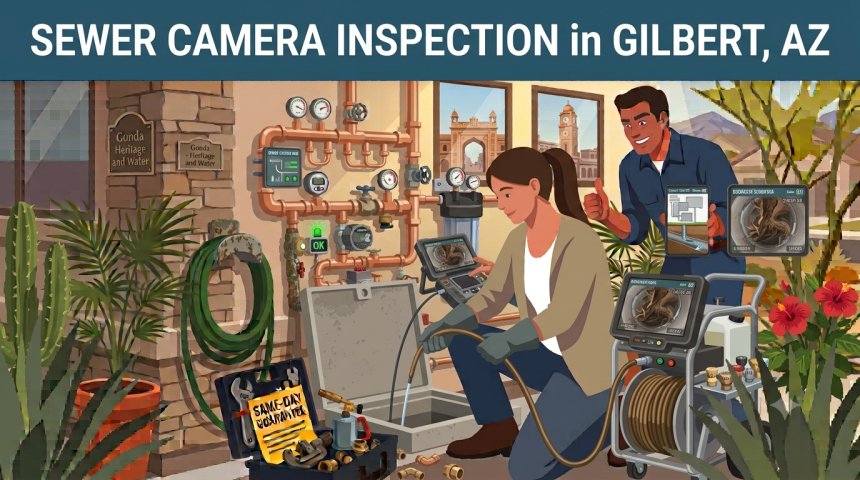
Sewer Camera Inspection in Gilbert, AZ
Sewer lines are located underground or inside inaccessible areas, which makes diagnosing sewer problems difficult without specialized equipment.
A property may experience recurring drain backups, slow drainage, foul odors, or other symptoms without making the exact cause obvious.
Professional sewer camera inspection in Gilbert, AZ allows a plumber to examine the inside of a sewer or drain line using a specialized camera.
Instead of immediately excavating the property, a camera can provide visual information about the condition and location of problems inside the pipe.
What Is a Sewer Camera Inspection?
A sewer camera inspection uses a small waterproof camera attached to a flexible cable.
The camera is inserted into an accessible drain or sewer cleanout.
As it travels through the pipe, it transmits images that allow the plumber to inspect the interior of the line.
Depending on the equipment, the plumber may also be able to identify the approximate location and depth of a problem.
Why Sewer Camera Inspections Are Useful
A sewer camera can help identify problems that cannot be diagnosed accurately from surface symptoms alone.
It may reveal:
-
Blockages
-
Cracks
-
Root intrusion
-
Broken joints
-
Pipe separation
-
Corrosion
-
Collapsed sections
-
Heavy buildup
-
Foreign objects
-
Structural deterioration
This information can help determine the appropriate repair strategy.
Signs You May Need a Sewer Camera Inspection
Recurring Sewer Backups
If a sewer line repeatedly backs up after cleaning, a structural issue may be present.
Multiple Slow Drains
Several slow drains can indicate a larger sewer line restriction.
Foul Sewer Odors
Persistent sewer smells may indicate drainage or sewer problems.
Unexplained Plumbing Problems
Recurring issues without an obvious cause may justify a camera inspection.
Suspected Root Intrusion
Tree roots can enter sewer pipes through cracks or joints.
Before Buying a Home
A sewer inspection can provide additional information about underground plumbing before a property purchase.
Sewer Camera Inspection Process
Step 1: Locate an Access Point
The plumber identifies a suitable cleanout or access point.
Step 2: Insert the Camera
The camera is carefully guided into the sewer or drain line.
Step 3: Inspect the Pipe Interior
The plumber watches the camera feed while moving through the pipe.
Step 4: Identify Problems
The camera can reveal blockages, damage, roots, and other conditions.
Step 5: Determine Problem Location
The equipment may help identify where the issue is located.
Step 6: Recommend a Solution
The plumber explains whether cleaning, repair, or replacement is appropriate.
Sewer Camera Inspection for Recurring Clogs
A drain that repeatedly becomes clogged may have more than a simple obstruction.
Possible underlying causes include:
-
Pipe buildup
-
Root intrusion
-
Broken pipe
-
Misaligned joints
-
Collapsed pipe
-
Structural deterioration
A camera inspection can help determine why the blockage keeps returning.
Sewer Camera Inspection for Tree Roots
Tree roots can enter sewer lines through cracks, joints, or damaged sections.
The camera can help identify:
-
Root location
-
Extent of intrusion
-
Pipe condition
-
Possible structural damage
Removing roots may temporarily restore flow, but recurring root intrusion may require pipe repair or replacement.
Sewer Camera Inspection Before Buying a Home
A home purchase involves many major considerations.
A sewer line may not be visible during a normal property inspection.
A sewer camera inspection can provide additional information about the underground drainage system.
Potential findings may include:
-
Cracked pipes
-
Root intrusion
-
Heavy buildup
-
Old pipe materials
-
Partial collapse
-
Misaligned sections
The inspection can help buyers understand potential sewer maintenance or repair needs.
Sewer Camera Inspection for Older Homes
Older properties may have aging sewer infrastructure.
A camera inspection can provide information about the actual condition of the sewer line.
This can be especially useful when a property has experienced repeated drainage problems.
Sewer Camera Inspection and Hydro Jetting
A sewer camera can be used before hydro jetting to determine whether cleaning is appropriate.
It may also be used after cleaning to check the results.
This combination can provide a clearer understanding of both the pipe's cleanliness and structural condition.
Sewer Camera Inspection for Commercial Properties
Commercial sewer systems can experience heavy use.
Recurring drainage problems can affect operations and customers.
A camera inspection can help identify problems before deciding on major excavation or replacement.
What a Sewer Camera Can Find
A sewer camera may identify:
Cracks
Cracks can allow water infiltration and root intrusion.
Root Intrusion
Roots may enter through damaged joints or cracks.
Blockages
Debris and buildup can restrict flow.
Pipe Separation
Pipe joints may shift or separate.
Collapsed Pipes
Severely damaged sections can restrict or completely block wastewater flow.
Corrosion
Certain pipe materials may deteriorate internally.
Heavy Buildup
Grease, sludge, mineral deposits, and other materials may accumulate inside the pipe.
Sewer Camera Inspection Cost in Gilbert
The cost depends on:
-
Pipe length
-
Accessibility
-
Location
-
Inspection complexity
-
Type of equipment
-
Whether additional diagnostic services are required
A straightforward inspection may be simpler than accessing a difficult underground sewer system.
Does Sewer Camera Inspection Require Digging?
One of the main advantages of camera inspection is that it can often be performed through an existing cleanout or other access point.
This can allow the plumber to inspect the interior without immediately excavating the property.
However, if no suitable access exists, additional work may be necessary.
What Happens After the Inspection?
After identifying the condition of the sewer line, the plumber can explain the available options.
Possible recommendations include:
-
Drain cleaning
-
Hydro jetting
-
Root removal
-
Spot repair
-
Trenchless repair
-
Sewer line replacement
The appropriate solution depends on the actual condition of the pipe.
Sewer Camera Inspection vs. Traditional Diagnosis
Traditional diagnosis often relies on symptoms such as slow drains or backups.
Camera inspection provides visual evidence from inside the pipe.
This can help reduce guesswork and make repair recommendations more precise.
Sewer Camera Inspection for Preventive Maintenance
Camera inspections can sometimes be useful even when there is no emergency.
For older properties, properties with previous sewer issues, or homes being purchased, an inspection may provide valuable information about the condition of the sewer line.
Questions to Ask a Sewer Inspection Professional
Ask:
-
How far can the camera inspect?
-
Was the entire accessible sewer line checked?
-
What problems were found?
-
Where is the problem located?
-
Is there root intrusion?
-
Is the pipe structurally damaged?
-
Does the line need cleaning?
-
Is repair or replacement necessary?
-
Can trenchless options be considered?
Preventing Sewer Problems
Homeowners can reduce some sewer problems by:
-
Avoiding flushing inappropriate materials.
-
Keeping grease out of drains.
-
Addressing recurring clogs early.
-
Maintaining trees and landscaping appropriately.
-
Scheduling professional inspection when recurring problems occur.
-
Avoiding unnecessary chemical drain products.
Professional Sewer Camera Inspection in Gilbert, AZ
Sewer problems can be difficult to diagnose because the pipes are often hidden underground.
Professional sewer camera inspection in Gilbert, AZ provides a way to visually examine the inside of a sewer line and identify blockages, root intrusion, cracks, collapsed sections, buildup, and other problems.
Whether you are dealing with recurring sewer backups, purchasing an older home, or considering sewer repair, a camera inspection can provide useful information before major work begins.
If you suspect a sewer line problem, schedule a professional camera inspection to determine what is happening inside the pipe and identify the most appropriate next step.