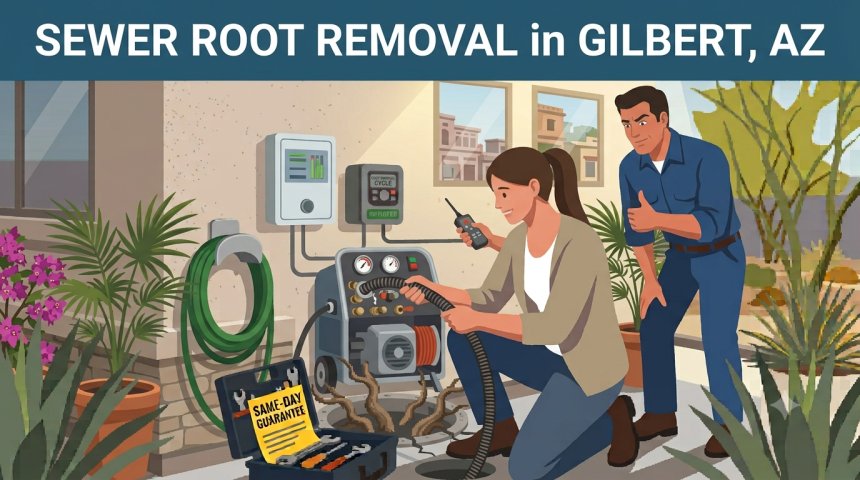
Sewer Root Removal in Gilbert, AZ
Tree roots and other vegetation can become a serious problem for underground sewer lines. Roots naturally seek moisture, and a sewer pipe with a crack, separated joint, damaged connection, or other opening can provide access to water and nutrients. Once roots enter the pipe, they can grow and collect additional debris, restricting wastewater flow and causing repeated blockages.
Professional sewer root removal in Gilbert, AZ can help clear root intrusion and restore drainage when the sewer pipe is suitable for cleaning. However, root removal is not always a permanent solution. If the underlying pipe has structural damage, repair or replacement may eventually be necessary.
What Is Sewer Root Intrusion?
Sewer root intrusion occurs when plant or tree roots enter an underground sewer pipe through an opening or damaged section.
Root intrusion can happen when a pipe develops:
- Cracks
- Separated joints
- Loose connections
- Small openings
- Structural deterioration
- Damaged sections
Once roots enter the pipe, they can continue growing and create a dense obstruction.
Signs of Tree Roots in a Sewer Line
Root intrusion can produce several warning signs.
Common symptoms include:
- Repeated sewer clogs
- Slow drains throughout the property
- Frequent toilet backups
- Gurgling toilets
- Sewer odors
- Wastewater backups
- Drainage problems that return after cleaning
- Unexplained recurring blockages
A single clogged sink does not automatically mean tree roots are involved. When several fixtures are affected or the problem repeatedly returns, a professional sewer inspection can help identify the cause.
Why Roots Enter Sewer Pipes
Roots are attracted to moisture. A properly intact sewer pipe should not normally allow roots to enter its interior.
When a pipe becomes damaged or a joint separates, moisture may escape into the surrounding soil. Roots can grow toward that moisture and eventually reach the opening.
Over time, the roots can expand inside the pipe and interfere with wastewater flow.
How Sewer Root Removal Works
Professional root removal generally begins with diagnosing the location and extent of the intrusion.
The process may involve:
- Identifying the affected sewer line
- Locating an appropriate access point
- Inspecting the pipe when necessary
- Removing or cutting roots
- Clearing accumulated debris
- Testing wastewater flow
- Evaluating the pipe condition
- Recommending additional repair if needed
The exact method depends on the size of the pipe, severity of the intrusion, and condition of the sewer line.
Mechanical Root Cutting
Specialized mechanical sewer equipment can cut and remove roots from inside the pipe.
This method may be appropriate when the pipe itself remains serviceable and the primary problem is root growth.
Mechanical root cutting can restore flow, but it does not necessarily repair the damaged pipe that allowed the roots to enter.
Hydro Jetting for Root Intrusion
Hydro jetting uses high-pressure water to clean the inside of suitable sewer pipes.
It can help remove:
- Root material
- Organic buildup
- Grease
- Sludge
- Other debris
Hydro jetting should be selected based on pipe condition. Severely damaged or deteriorated pipes may require repair or replacement instead of aggressive cleaning.
Sewer Camera Inspection
A sewer camera is particularly useful when root intrusion is suspected.
The camera can help identify:
- Root growth
- Cracks
- Broken pipe sections
- Open joints
- Pipe offsets
- Heavy buildup
- Collapsed areas
Camera inspection provides information about whether root removal alone may be sufficient or whether the pipe needs structural work.
Why Root Removal May Be Temporary
Removing roots clears the immediate obstruction, but if the pipe remains cracked or separated, roots may eventually return.
This is why recurring root intrusion should not always be treated as a simple drain-cleaning problem.
If roots repeatedly grow back after cleaning, professional evaluation of the sewer pipe may be appropriate.
Sewer Root Removal vs. Sewer Repair
Root removal addresses the blockage created by roots.
Sewer repair addresses the damaged pipe that may have allowed the roots to enter.
For example, if a camera shows roots entering through a cracked pipe joint, removing the roots may restore flow temporarily. Repairing the damaged section can address the underlying structural problem.
Common Symptoms After Root Intrusion
A property affected by sewer roots may experience:
- Slow flushing toilets
- Multiple slow drains
- Water backing up into tubs
- Sewer smells
- Gurgling sounds
- Repeated drain cleaning
- Unexpected wastewater backups
These symptoms should be professionally evaluated when they continue or recur.
Emergency Sewer Root Problems
A root blockage can become an emergency when wastewater begins backing up into the property.
Prompt service may be appropriate when:
- Multiple toilets are backing up
- Sewage enters a bathtub
- Wastewater appears in floor drains
- Drains stop working throughout the home
- A severe sewer odor is accompanied by backups
Avoid unnecessary contact with sewage and keep children and pets away from contaminated areas.
Can Tree Roots Be Prevented From Entering Sewer Lines?
Complete prevention is not always possible if the sewer pipe has structural openings.
However, homeowners can reduce the likelihood of major problems through:
- Regular sewer inspections when appropriate
- Prompt repair of damaged pipes
- Monitoring recurring clogs
- Professional root removal
- Proper landscaping awareness
- Sewer camera inspections for recurring problems
The most effective long-term solution depends on why roots are entering the pipe.
Sewer Line Replacement for Root Damage
If root intrusion is associated with severe structural damage, sewer line replacement may be considered.
Replacement may become appropriate when the pipe is:
- Collapsed
- Severely cracked
- Structurally unstable
- Repeatedly blocked
- Extensively deteriorated
Depending on the property, traditional excavation or trenchless options may be available.
Cost Factors
Sewer root removal costs can vary based on:
- Root growth severity
- Sewer pipe size
- Pipe location
- Access point
- Required equipment
- Cleaning method
- Camera inspection
- Root density
- Pipe condition
- Need for repair or replacement
A professional inspection is generally needed to determine the actual scope of work.
Maintenance After Root Removal
After roots are removed, homeowners should monitor the plumbing system for recurring symptoms.
Helpful practices include:
- Watching for slow drains
- Paying attention to gurgling toilets
- Addressing recurring backups
- Scheduling camera inspection when appropriate
- Repairing damaged sewer sections
- Avoiding inappropriate items in drains
If the same symptoms return shortly after cleaning, additional diagnosis may be necessary.
Frequently Asked Questions
How do tree roots get into sewer pipes?
Roots can enter through cracks, separated joints, damaged connections, or other openings in underground sewer pipes.
Can sewer roots be completely removed?
Roots can often be mechanically or hydraulically cleared from a suitable sewer pipe. However, if the pipe remains damaged, roots may return.
Does root removal permanently fix a sewer line?
Not necessarily. Root removal addresses the blockage, while permanent correction may require repairing the damaged section of pipe.
How do I know if roots are causing my sewer clog?
Recurring blockages, multiple affected fixtures, sewer backups, and camera inspection findings can indicate root intrusion.
Can hydro jetting remove tree roots?
Hydro jetting may remove certain root growth and buildup from suitable sewer pipes. The pipe's structural condition should be evaluated first.
Should I replace my sewer line because of roots?
Not automatically. Replacement depends on the extent of structural damage, frequency of recurrence, pipe condition, and available repair options.
Conclusion
Sewer root intrusion can cause recurring blockages, slow drainage, and wastewater backups. Sewer root removal in Gilbert, AZ can help clear root growth and restore flow when the sewer pipe remains suitable for cleaning.
Because roots often enter through cracks or damaged joints, removing the roots may not always address the underlying problem. A sewer camera inspection can help determine whether cleaning is sufficient or whether pipe repair or replacement is necessary.