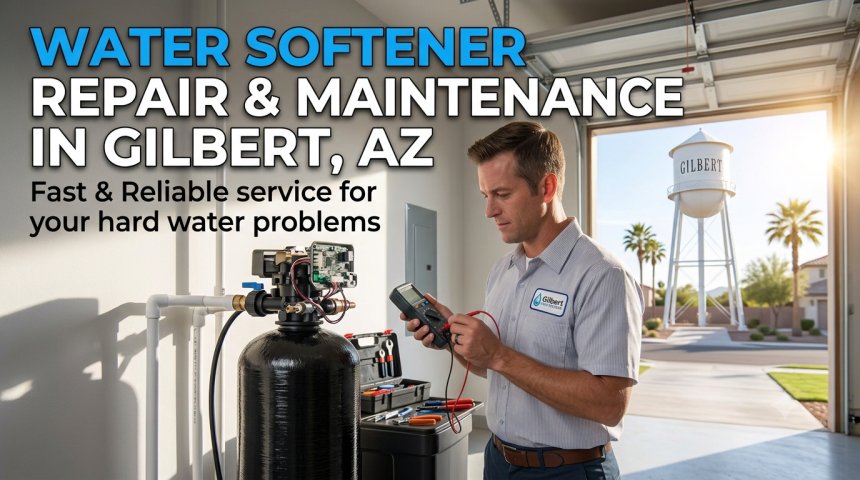
Water Softener Repair in Gilbert, AZ
A water softener is designed to continuously treat household water, but like any mechanical and plumbing equipment, it can eventually develop problems. A system that is not regenerating properly, leaking around its connections, producing poor results, or experiencing control-valve issues may require professional inspection.
Reliable water softener repair in Gilbert, AZ can help identify the cause of the problem and determine whether repair, maintenance, or replacement is the most practical solution.
Water softener problems can originate from plumbing connections, the control valve, resin tank, brine system, drain line, programming, or other components. Simply adding more salt or changing settings may not solve the underlying issue.
Common Water Softener Problems
Some of the most common water softener issues include:
-
Water softener not regenerating
-
Hard water returning
-
Salt bridge
-
Salt tank problems
-
Water leaking around the unit
-
Low water flow
-
Drain line blockage
-
Brine system problems
-
Control valve malfunction
-
Incorrect programming
-
Unusual noises
-
Overflowing brine tank
-
Poor water treatment performance
Each symptom can have multiple possible causes.
Signs Your Water Softener Needs Repair
You may need professional service if:
-
Water suddenly feels harder than usual.
-
Scale appears again on fixtures.
-
The system is not using salt as expected.
-
The brine tank is overflowing.
-
Water is leaking around the equipment.
-
The unit makes unusual noises.
-
The system fails to regenerate.
-
Water flow is reduced.
-
The control display shows an error.
-
The softener repeatedly requires manual resetting.
A professional inspection can determine whether the issue is mechanical, plumbing-related, or related to system settings.
Water Softener Not Regenerating
Regeneration is an important part of many conventional water softeners. During regeneration, the system restores the resin's ability to exchange hardness minerals.
If regeneration does not occur properly, possible causes can include:
-
Incorrect programming
-
Control valve problems
-
Electrical issues
-
Blocked brine line
-
Salt-related problems
-
Water pressure problems
-
Mechanical failure
The exact cause should be identified before replacing components.
Hard Water After Installing a Softener
If hard-water symptoms return after installation, several factors should be considered.
The problem may involve:
-
Incorrect system settings
-
Equipment that is too small for household demand
-
Salt supply issues
-
Resin performance
-
Incorrect plumbing connections
-
Control valve problems
-
Regeneration failure
-
Changes in water conditions
Testing the treated water can help determine whether the softener is performing as expected.
Salt Bridge Problems
A salt bridge occurs when salt forms a hard layer inside the brine tank, preventing proper salt dissolution.
This can make the tank appear to contain plenty of salt even though the system does not have enough usable brine for regeneration.
Professional inspection can determine whether a salt bridge is present and whether additional maintenance is required.
Brine Tank Problems
The brine tank is an important component of many salt-based water softeners.
Potential problems include:
-
Excess water
-
Salt buildup
-
Salt bridging
-
Brine line blockage
-
Float problems
-
Improper filling
-
Overflow
A plumber or water-treatment professional can inspect the tank and connected components to determine the cause.
Water Softener Leaking
A leaking softener should not be ignored.
Water may leak from:
-
Inlet connection
-
Outlet connection
-
Valve assembly
-
Drain connection
-
Brine line
-
Tank
-
Fittings
-
Nearby shut-off valves
The source of the leak should be identified before deciding whether a fitting repair, component replacement, or complete equipment replacement is required.
Control Valve Repair
The control valve manages important functions in many water softeners.
Problems with the valve can cause:
-
Improper regeneration
-
Incorrect water flow
-
Continuous draining
-
Failure to enter regeneration
-
Incorrect cycle timing
-
Water bypassing treatment
Depending on the equipment's design and age, a valve may sometimes be serviced or repaired rather than replacing the entire softener.
Water Softener Drain Line Problems
During certain operating cycles, water softeners require proper drainage.
A blocked, kinked, disconnected, or improperly installed drain line can affect system performance.
Potential signs include:
-
Overflowing water
-
Failed regeneration
-
Unexpected draining
-
Water around the unit
-
System errors
The drain line should be inspected for restrictions and proper connection.
Low Water Pressure Through a Water Softener
If water pressure drops after water passes through the softener, the system may have a restriction.
Potential causes include:
-
Clogged components
-
Valve problems
-
Incorrect installation
-
Excessive mineral buildup
-
Plumbing restrictions
-
Equipment limitations
Pressure should be evaluated across the system to determine whether the softener is actually responsible.
Water Softener Making Noise
Some operating sounds are normal, particularly during regeneration. However, sudden or unusually loud noises may indicate a problem.
Possible causes include:
-
Valve operation issues
-
Water pressure changes
-
Loose components
-
Flow restrictions
-
Mechanical wear
The timing and type of noise can help a professional identify the potential source.
Water Softener Maintenance
Regular maintenance can reduce the likelihood of unexpected problems.
Maintenance may include:
-
Checking salt levels
-
Inspecting the brine tank
-
Monitoring water quality
-
Checking for leaks
-
Inspecting valves
-
Checking drain connections
-
Reviewing programming
-
Cleaning components as recommended
-
Following manufacturer instructions
Maintenance requirements vary according to the system.
Repair vs. Replacement
Not every water softener problem means the entire system needs replacement.
Repair may be appropriate when:
-
The tank remains in good condition.
-
The issue is limited to a valve or connection.
-
Replacement parts are available.
-
The equipment is relatively new.
-
Repair is economically reasonable.
Replacement may be considered when:
-
The equipment is severely damaged.
-
The system repeatedly fails.
-
Major components are no longer serviceable.
-
Replacement parts are unavailable.
-
The system is inefficient for household demand.
-
Repair costs approach the cost of a suitable new system.
A professional evaluation can help compare both options.
Water Softener Inspection
A complete inspection may include:
-
Inlet and outlet plumbing
-
Bypass valve
-
Control valve
-
Brine tank
-
Brine line
-
Drain line
-
Water pressure
-
System settings
-
Visible leaks
-
General equipment condition
Inspection is especially useful when the cause of poor performance is unclear.
Water Softener Repair for Older Systems
Older systems may develop multiple issues over time. Components can wear out, seals can deteriorate, and control systems may become difficult to service.
Before repairing an older softener, it may be useful to compare:
-
Age of equipment
-
Availability of replacement parts
-
Repair cost
-
Expected remaining service life
-
Current water-treatment performance
-
Household water demand
Sometimes repairing one component is enough. In other cases, replacement provides a more practical long-term solution.
Emergency Water Softener Problems
Most softener issues are not emergencies, but an active leak can become a plumbing concern.
If water is actively leaking:
-
Shut off the softener if the system has an accessible shut-off.
-
If necessary, shut off the home's main water supply.
-
Keep electrical equipment away from standing water.
-
Remove items from the affected area.
-
Arrange professional inspection.
The appropriate response depends on the severity and location of the leak.
Water Softener Repair Cost Factors
Repair pricing depends on the problem and equipment.
Factors may include:
-
Replacement parts
-
Labor
-
Equipment age
-
Accessibility
-
Valve condition
-
Plumbing modifications
-
Drain-line work
-
Brine-system repairs
-
Emergency service
-
Whether replacement is required
An inspection can provide a more useful estimate than trying to determine repair costs based only on symptoms.
Frequently Asked Questions
Why is my water softener not working?
Possible causes include salt problems, programming errors, valve issues, blocked lines, or mechanical failure. Professional testing can identify the specific problem.
Why is my water still hard after using a water softener?
The system may not be regenerating properly, may be incorrectly programmed, or may have another mechanical or plumbing issue.
Can a water softener leak?
Yes. Leaks can occur at plumbing connections, valves, tanks, drain lines, or other components.
What causes a water softener to overflow?
Possible causes include problems with the float, brine system, valve, drain line, or operating cycle.
Can a salt bridge be repaired?
A salt bridge can often be addressed through proper maintenance, but the cause should also be investigated if the problem keeps returning.
Should I repair or replace my water softener?
The decision depends on equipment age, condition, repair cost, replacement-part availability, and overall performance.
How often should a water softener be serviced?
There is no universal schedule. Manufacturer recommendations, water conditions, household usage, and system age should be considered.
Conclusion
Professional water softener repair in Gilbert, AZ can help restore proper system operation when a softener develops leaks, regeneration problems, salt issues, valve failures, or poor treatment performance.
Rather than repeatedly adjusting the system without identifying the cause, homeowners should consider professional inspection when problems continue. A qualified plumber can determine whether the issue can be repaired or whether replacing the equipment would be more practical.
Regular maintenance and timely repairs can also help extend the useful life of a water softener and maintain consistent household water treatment.