Water Heater Sediment & Kettling Sounds in Gilbert AZ
Learn why hard water sediment causes water heater kettling and popping sounds in Gilbert homes. Discover safe maintenance and professional repair steps.
Understanding Water Heater Sediment and Kettling in Gilbert Homes
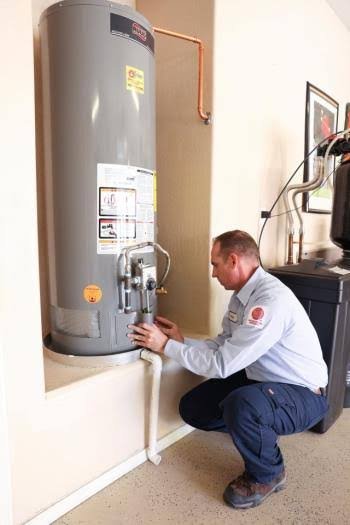
Water heater sediment accumulation is an inevitable chemical reality for homeowners in Gilbert, Arizona, where municipal water supplies carry elevated levels of dissolved minerals like calcium and magnesium. When these minerals precipitate out of the water due to thermal energy, they settle at the bottom of the tank, forming a dense layer of solid scale. This sediment barrier creates a physical buffer between the burner or lower heating element and the water volume above. As intense heat becomes trapped beneath this mineral layer, localized boiling occurs rapidly, generating expanding steam bubbles that force their way upward through the sludge. This physical reaction produces the characteristic rumbling, banging, or popping noise known in the trade as kettling.
From a mechanical perspective, this process drastically degrades thermal efficiency. The bottom of the steel tank overheats because the heat cannot transfer efficiently into the water column. Over time, this localized overheating fatigues the glass-lined steel tank and weakens factory welds, accelerating corrosion and leading to premature tank failure. Furthermore, sediment accumulation reduces the effective gallon capacity of the storage tank, resulting in shorter hot water cycles and increased energy consumption as the system struggles to satisfy household demand.
The Impact of Extreme Desert Heat and Thermal Expansion
Operating a storage water heater in the East Valley introduces unique environmental stressors. Ambient garage temperatures during Phoenix-area summers routinely exceed 110 degrees Fahrenheit, placing immense thermal stress on external plumbing connections, dielectric unions, and expansion tanks. When municipal water enters a Gilbert home at high pressure and is heated, it expands significantly in volume. Without a properly functioning thermal expansion tank connected to the cold water supply line, this trapped hydraulic pressure spikes dramatically every time the burner fires.
Combined with heavy mineral sedimentation, these pressure spikes force temperature and pressure (T&P) relief valves to weep or fail completely. Homeowners often mistake a dripping T&P discharge pipe for a simple valve defect when it is actually acting as a critical safety release for unchecked thermal expansion and boiling sediment-laden water. Additionally, high incoming municipal water pressure—often exceeding 80 PSI in certain Maricopa County districts—accelerates the wear on internal tank components and magnifies the destructive energy of water hammer events.
Diagnostic Breakdown: Sediment Buildup vs. Failing Heating Elements
Determining whether unusual sounds and lukewarm water stem from sediment buildup or mechanical component failure requires systematic troubleshooting. Diagnosing these symptoms correctly prevents unnecessary part replacements and targets the root cause of system inefficiency.
| Symptom | Probable Cause | Diagnostic Indicator |
|---|---|---|
| Loud popping or banging during heating cycles | Calcium carbonate sediment blanket trapping steam bubbles | Noise occurs exclusively while the burner or lower element is actively firing |
| Hissing or sizzling sounds | Severe scale encrustation directly on electric heating elements | Elements operating at excessively high temperatures due to localized dry-firing |
| Sudden loss of hot water capacity | Thick sediment displacement occupying usable tank volume | Hot water runs out in half the normal time despite steady recovery settings |
| Continuous dripping from the T&P relief valve | Uncontrolled thermal expansion or excessive system pressure | Discharge pipe releases water continuously or during heating cycles without over-temperature |
Safe Homeowner Maintenance Triage vs. Dangerous DIY Boundaries
Routine maintenance can extend the operational lifespan of a residential water heater, but strict safety boundaries must be observed to prevent severe scalding, property damage, or personal injury.
Safe Homeowner Maintenance Steps
- Verify Water Pressure: Attach a temporary pressure gauge to an outdoor hose bibb to check if incoming municipal pressure exceeds 80 PSI, indicating the need for a pressure reducing valve (PRV).
- Test the T&P Valve: Safely lift and snap the test lever on the temperature and pressure relief valve to ensure the internal spring mechanism moves freely, keeping a bucket underneath the discharge pipe.
- Inspect Anode Rods: Visually check the condition of sacrificial anode rods if accessible, as these magnesium or aluminum rods corrode sacrificially to protect the steel tank from premature rusting.
Explicit Safety Warnings
- Never unthread or force stuck drain valves on older water heaters without having a replacement brass ball valve and proper sealing tape on hand, as plastic factory drain valves snap easily under torque, unleashing uncontrolled municipal water pressure.
- Do not touch gas control valves or electrical access panels while standing in standing water or damp garage environments to avoid catastrophic electrical shock or gas leak ignition hazards.
- Avoid using commercial chemical acid flush products in residential water heaters unless specifically rated for potable water systems, as they can corrode tank linings and poison household water supplies.
Realistic Repair Approaches and Replacement Decision Support
When sediment accumulation reaches advanced stages—particularly in tanks older than eight to ten years that have never been flushed—standard maintenance is often insufficient. Professional intervention typically involves assessing whether a comprehensive chemical flush and lower element replacement can salvage the unit or if a complete tank replacement is required.
In Gilbert, replacement decisions are heavily influenced by local water chemistry and installation codes. Modern installations require thermal expansion tanks, updated seismic strapping where applicable, and compliant drainage pans routed safely outdoors or to indirect waste lines. Choosing between standard tank-type heaters and high-efficiency tankless units depends on household consumption patterns and the physical configuration of existing gas supply lines and venting pathways. Tankless systems mitigate traditional sediment-boiling issues through continuous-flow heat exchangers, though they remain sensitive to hard water scale and require regular descaling maintenance using inhibited vinegar flushing kits.
Frequently Asked Questions
How often should I flush my water heater in Gilbert, AZ?
Due to the exceptionally high mineral content in the local municipal water supply, residential water heaters in Gilbert should be flushed at least once every 12 months to prevent hard scale buildup and kettling noises.
Can an old water heater explode if it makes a popping noise?
While catastrophic tank explosions are exceedingly rare due to the mandatory installation of safety T&P relief valves, severe sediment buildup causes extreme metal fatigue, micro-fracturing, and eventual tank rupture, leading to major indoor flooding.
Why does my water heater make noise even after I flushed it?
If heavy calcium scale has baked into a solid, rock-like crust at the bottom of the tank over many years, a standard garden-hose flush cannot dislodge it. Professional scraping tools, specialized descaling agents, or tank replacement may be necessary.
Is it safe to drain a water heater into my residential landscaping?
Draining warm water temporarily onto grass or desert landscaping is generally acceptable during a flush, but municipal ordinances regulate graywater and sediment discharge into public storm drains. Always direct discharge safely to prevent soil erosion or property damage.
What causes the anode rod to dissolve so quickly in East Valley homes?
Sacrificial anode rods dissolve rapidly in response to aggressive mineral content and electrical currents in treated municipal water. In hard water regions, these rods may need replacement every three to five years to prevent rapid rusting of the interior tank walls.