Reverse Osmosis System Installation in Gilbert, AZ
A reverse osmosis system can provide an additional level of drinking-water filtration for homeowners who want to improve the taste, odor, and overall quality of water at a specific faucet or throughout selected areas of a property. These systems are commonly installed under kitchen sinks and can be connected to a dedicated drinking-water faucet.
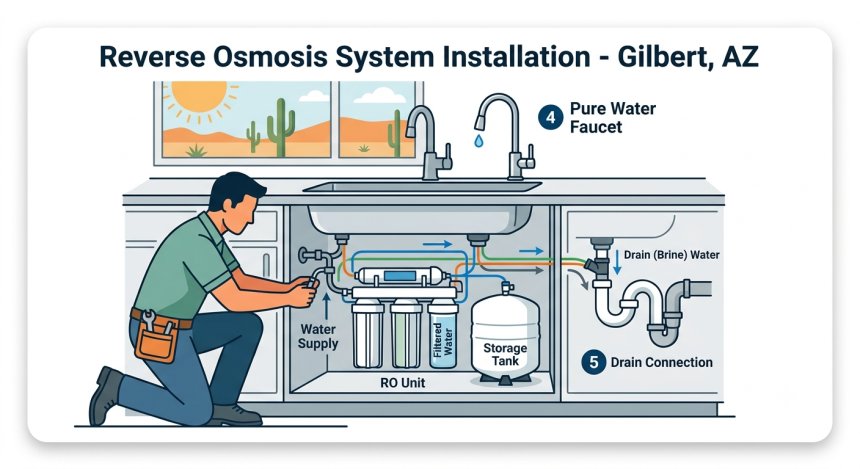
Professional reverse osmosis system installation in Gilbert, AZ helps ensure that the filtration equipment, water supply connection, drain connection, storage tank, and faucet are installed correctly.
A reverse osmosis system is more than simply a filter placed on a water line. It includes several components that need to work together. Depending on the system, these may include sediment filtration, carbon filtration, a reverse osmosis membrane, a storage tank, post-filtration, tubing, valves, and a dedicated faucet.
Proper installation can help reduce leaks, drainage problems, poor water flow, and other issues that may occur when an RO system is installed incorrectly.
What Is a Reverse Osmosis System?
Reverse osmosis is a water-treatment process that uses pressure to move water through a specialized membrane. The membrane allows water to pass while restricting many dissolved substances and contaminants.
Residential RO systems commonly use several stages of treatment.
A typical system may include:
- Sediment filter
- Carbon pre-filter
- Reverse osmosis membrane
- Post-carbon filter
- Storage tank
- Dedicated drinking-water faucet
- Feed-water valve
- Drain connection
- Tubing and fittings
The exact configuration varies by manufacturer and model.
Reverse Osmosis Installation Services in Gilbert, AZ
Professional RO installation may include:
- Under-sink reverse osmosis installation
- Replacement RO system installation
- RO drinking-water faucet installation
- RO storage tank installation
- Water supply connection
- Drain connection
- Filter housing installation
- Tubing installation
- Shut-off valve installation
- Leak inspection
- System testing
- Existing RO system replacement
- Plumbing modifications for compatible systems
The correct installation method depends on the equipment and the existing plumbing configuration.
Under-Sink Reverse Osmosis Installation
Under-sink RO systems are a common option for residential drinking-water filtration.
The system is usually installed inside the cabinet beneath a kitchen sink. A dedicated faucet can be mounted on or near the sink to dispense treated water.
Before installation, a professional may evaluate:
- Available cabinet space
- Existing water supply
- Sink configuration
- Drain connection
- Faucet location
- Water pressure
- Accessibility
- Existing filtration equipment
Proper planning is important because the system requires space for filters, tubing, and other components.
Reverse Osmosis Faucet Installation
Many RO systems use a dedicated faucet instead of sending filtered water through the standard kitchen faucet.
Installation may involve creating or using an appropriate mounting location and connecting the faucet to the RO system.
A professional can check:
- Faucet compatibility
- Mounting space
- Tubing connections
- Shut-off components
- Cabinet clearance
- Potential leak points
The faucet should be securely mounted and properly connected before the system is placed into regular use.
RO Storage Tank Installation
Many residential reverse osmosis systems use a storage tank to hold treated water until it is needed.
The tank needs to be installed in a suitable location where it can remain stable and where the surrounding plumbing can be accessed.
The installer may check:
- Tank position
- Tubing connections
- Valve connections
- Available cabinet space
- System pressure requirements
- Potential interference with household storage
Correct tank installation can help support reliable water delivery from the RO faucet.
RO Water Supply Connection
An RO system requires a suitable connection to the household water supply.
The connection should be compatible with the system's specifications and installed securely.
A professional may inspect the existing:
- Water supply line
- Shut-off valve
- Fittings
- Tubing
- Connection points
If an existing valve is damaged or difficult to operate, replacing it before installing the RO system may be recommended.
Reverse Osmosis Drain Connection
Many RO systems produce a wastewater stream during the filtration process. That water generally needs an appropriate drain connection.
The drain connection should be installed according to the manufacturer's requirements and applicable plumbing practices.
Problems with an improperly installed drain connection may include:
- Leaking under the sink
- Drain odors
- Poor system operation
- Tubing disconnection
- Unwanted water discharge
Professional installation helps ensure the drain connection is secure and appropriately configured.
RO System Replacement
An existing reverse osmosis system may eventually require replacement because of age, repeated failures, damaged components, or changes in household needs.
Replacement may involve removing the old equipment and installing a new compatible system.
A professional can inspect the existing plumbing before installation to determine whether:
- The existing supply connection can be reused.
- The drain connection needs modification.
- The faucet should be replaced.
- Old tubing should be replaced.
- The storage tank needs replacement.
- Additional plumbing work is necessary.
Replacing worn components during installation can help reduce the chance of future leaks.
Signs You May Need a New RO System
Replacement may be worth considering if:
- The system is repeatedly leaking.
- Water flow has become very low.
- Replacement parts are difficult to obtain.
- The membrane or other major components require frequent replacement.
- The storage tank is damaged.
- The faucet is deteriorated.
- The system no longer meets household needs.
- Multiple components are failing at the same time.
A professional assessment can help determine whether repair or replacement makes more sense.
Reverse Osmosis System for Kitchen Drinking Water
The kitchen is often the most practical location for a residential RO system because drinking and cooking water are frequently used there.
An RO system can provide treated water for:
- Drinking
- Cooking
- Coffee and tea
- Food preparation
- Other household uses where filtered water is preferred
The actual uses depend on the system design and manufacturer's recommendations.
Reverse Osmosis System Installation During Kitchen Remodeling
Kitchen remodeling can be a convenient time to install or upgrade an RO system.
Planning the installation before cabinets, countertops, and plumbing are finalized can make it easier to determine:
- Faucet placement
- Cabinet space
- Water supply routing
- Drain connection
- Electrical requirements for compatible systems
- Filter accessibility
If an RO system is being added during a remodel, the plumbing layout should be considered before the final installation stage.
Reverse Osmosis System and Water Pressure
Water pressure can affect reverse osmosis system performance.
If pressure is insufficient for a particular system, the unit may produce water more slowly or operate differently than expected.
A professional may check the available water pressure before installation and verify that the selected system is appropriate for the home's conditions.
Some RO systems may use additional equipment depending on the installation requirements.
RO System Leak Prevention
Leaks are one of the most common concerns with under-sink filtration equipment.
Potential leak points include:
- Feed-water connection
- Filter housings
- Tubing fittings
- Storage tank connection
- Faucet connection
- Drain connection
- Shut-off valves
Careful installation and testing can help identify leaks before the system is placed into normal use.
Homeowners should also periodically inspect the cabinet underneath the sink for moisture.
Reverse Osmosis Filter Replacement
RO systems contain filters that require periodic replacement.
Different filters perform different functions, and replacement intervals depend on:
- Manufacturer recommendations
- Water quality
- Household usage
- System design
- Filter capacity
A professional can help identify which filters need replacement and inspect the system for additional problems.
Reverse Osmosis Membrane Replacement
The RO membrane is one of the most important components of the system.
Over time, membrane performance can decline depending on water conditions and system usage.
Signs of possible membrane problems can include:
- Reduced production
- Changes in water quality
- Reduced system performance
- Unusual operating behavior
Testing and manufacturer guidance should be used to determine whether membrane replacement is necessary.
RO System Maintenance
Installation is only the first step. Regular maintenance can help keep the system operating properly.
Homeowners should consider:
- Replacing filters according to manufacturer guidance.
- Checking connections for leaks.
- Inspecting tubing.
- Monitoring water flow.
- Keeping the area around the system accessible.
- Checking the dedicated faucet.
- Inspecting the storage tank.
- Following sanitation instructions.
- Addressing unusual changes in water quality.
Maintenance requirements vary according to the system.
Professional RO Installation vs. DIY Installation
Some residential RO systems are marketed as homeowner-installation products. However, plumbing connections can still create problems if the system is installed incorrectly.
Professional installation can be useful when:
- Existing plumbing is complicated.
- The sink requires modification.
- A new shut-off valve is needed.
- The drain connection requires changes.
- The cabinet has limited space.
- An older RO system is being replaced.
- The homeowner wants the installation inspected and tested.
Professional service can also help identify plumbing conditions that may affect the performance of the filtration system.
Choosing the Right Location for an RO System
The installation location should provide sufficient space for the equipment and allow access for future maintenance.
Important considerations include:
- Cabinet dimensions
- Filter accessibility
- Tank size
- Faucet location
- Water supply access
- Drain access
- Protection from accidental damage
- Ease of maintenance
The system should not be placed where filters cannot be removed or where connections are difficult to inspect.
Reverse Osmosis Installation for New Homes
Homeowners building or purchasing a new property may want to plan RO installation before the kitchen plumbing is finalized.
Early planning can help determine:
- Water supply location
- Drain connection
- Faucet position
- Cabinet space
- Equipment placement
A plumbing professional can coordinate the installation with the existing kitchen plumbing layout.
RO Installation for Existing Homes
Existing homes may require additional preparation depending on the current plumbing.
The installer may need to work around:
- Existing cabinets
- Existing water filters
- Older shut-off valves
- Limited cabinet space
- Existing drain connections
- Previous plumbing modifications
A site inspection can help identify these conditions before installation begins.
Reverse Osmosis System Repair
If an RO system is already installed but is not working correctly, repair may be possible.
Common issues include:
- Slow water production
- Leaking tubing
- Poor faucet flow
- Tank problems
- Filter blockage
- Drain connection issues
- Shut-off valve problems
The system should be evaluated before replacing multiple components unnecessarily.
Reverse Osmosis System Cost Factors
The cost of installing an RO system varies according to the equipment and plumbing requirements.
Factors may include:
- Type of RO system
- Number of filtration stages
- Faucet type
- Storage tank
- Existing plumbing
- Required plumbing modifications
- Installation complexity
- Replacement of old components
- Filter configuration
- Labor
A professional assessment can provide a more accurate estimate based on the actual installation.
Frequently Asked Questions
How much does reverse osmosis installation cost in Gilbert, AZ?
The total cost depends on the RO system, installation requirements, plumbing connections, faucet, tank, and any modifications needed. A professional evaluation can provide a more accurate estimate.
Where is a reverse osmosis system usually installed?
Many residential RO systems are installed under the kitchen sink with a dedicated drinking-water faucet.
Does an RO system need a drain connection?
Many conventional residential RO systems require a drain connection because the filtration process can produce a wastewater stream. The exact requirements depend on the system.
How long does an RO system installation take?
Installation time varies depending on the system and existing plumbing. A straightforward under-sink installation may be relatively simple, while modifications to existing plumbing can require additional work.
Can an old RO system be replaced?
Yes. An old system can often be removed and replaced with a new compatible unit after inspecting the existing plumbing.
Does water pressure affect reverse osmosis?
Yes. RO systems operate under pressure, and insufficient pressure can affect production and performance. The system requirements should be checked before installation.
Can an RO system be installed during a kitchen remodel?
Yes. Kitchen remodeling can be a convenient time to plan the plumbing connections and faucet location for an RO system.
How often should RO filters be replaced?
Replacement intervals depend on the system, filter type, water quality, and usage. Manufacturer recommendations should be followed.
Can an RO system leak?
Yes. Leaks can occur at tubing, valves, filter housings, faucet connections, tanks, or drain connections. Prompt inspection is recommended if moisture appears.
Should I install an RO system myself?
Some systems are designed for homeowner installation, but professional installation may be beneficial when plumbing modifications or complex connections are involved.
Conclusion
Professional reverse osmosis system installation in Gilbert, AZ can provide homeowners with a properly connected and tested drinking-water filtration system. From under-sink installations and dedicated faucets to storage tanks, drain connections, filter housings, and replacement systems, each component needs to work correctly as part of the overall setup.
Before installation, it is important to evaluate the available space, water supply, drain connection, water pressure, and existing plumbing. Proper installation can help reduce leaks and make future filter maintenance easier.
If you are considering a new reverse osmosis system or replacing an older unit, contact a qualified plumbing professional in Gilbert, AZ for an assessment of your kitchen plumbing and installation requirements.