How to Extend the Life of Your Water Heater
Learn how to extend the life of your water heater in Gilbert, AZ. Hard water maintenance tips, anode rod replacement, flushing & more. Call 844 833 2093 for expert service.


How Long Should a Water Heater Last in Gilbert?
In most parts of the country, a traditional tank water heater lasts 8–12 years. But in Gilbert's hard water environment, that number drops to 8–12 years at the high end—and many units fail sooner without proper maintenance .
| Unit Type | National Average | Gilbert/AZ Lifespan |
|---|---|---|
| Tank water heater | 10–15 years | 8–12 years |
| Tankless water heater | 15–20+ years | 15–20 years (with annual descaling) |
The good news: with regular maintenance, you can add 2–4 years to your tank's life . Here's how.
The Gilbert Challenge: Why Your Water Heater Works Harder Here
Arizona water is notoriously hard, with mineral content ranging from 15–25 grains per gallon in Gilbert—far above the national average of 3–7 GPG . These minerals (calcium and magnesium) cause several problems:
-
Sediment accumulation: Minerals precipitate out of heated water and settle at the tank bottom, insulating the burner and forcing it to run longer and hotter .
-
Anode rod depletion: Hard water wears out the sacrificial anode rod 2–3x faster than soft water .
-
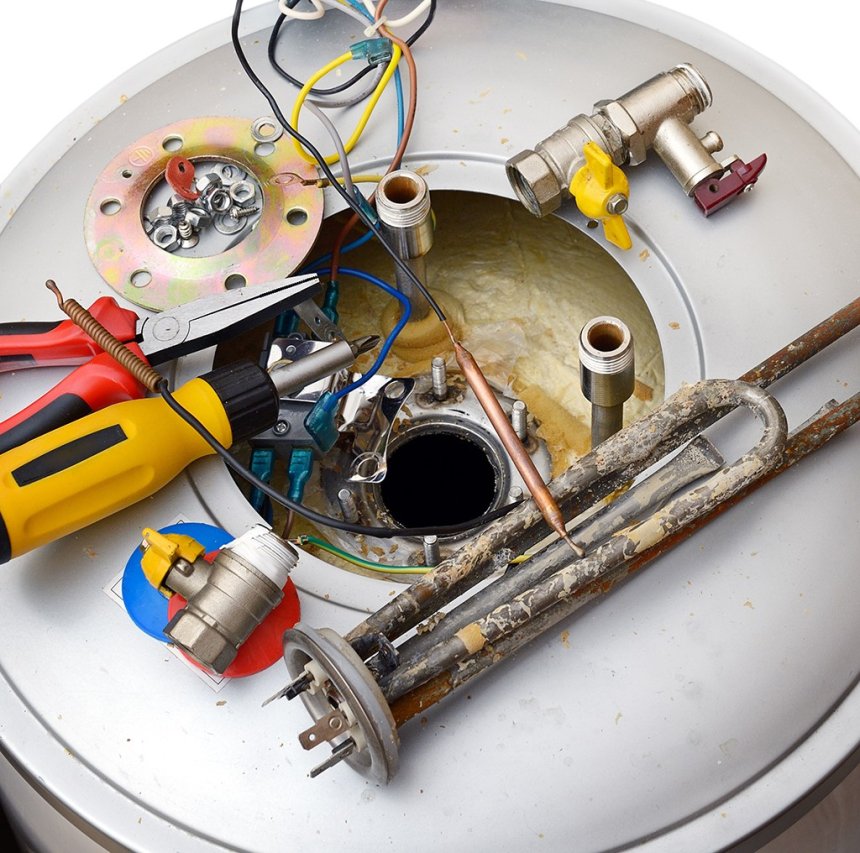
Heating element scaling: Electric heaters develop mineral deposits on elements, reducing efficiency and causing failure .
Add to this Arizona's extreme summer heat, which stresses seals, wiring, and tank linings, and you have a recipe for shortened equipment life .
5 Essential Maintenance Steps to Extend Your Water Heater's Life
1. Flush Your Tank Annually (or More Often)
Flushing your water heater removes sediment that accumulates at the bottom of the tank. This sediment acts like insulation between the burner or heating element and the water, forcing your system to work harder and use more energy .
How often to flush:
Caution for older units: If your water heater has never been flushed and is more than 8 years old, some plumbers recommend leaving it alone. Heavy sediment buildup may actually be helping seal tiny corrosion holes that could begin leaking once the sediment is removed . When in doubt, call a professional.
Quick flush steps:
If the standard drain valve opening is too small for sediment to escape, a plumber can replace it with a larger one—but this isn't recommended for units older than eight years .
2. Inspect and Replace the Anode Rod
The anode rod is a sacrificial metal rod (typically magnesium, aluminum, or zinc) inside your water heater tank. Its job is to attract corrosive elements in the water, protecting the steel tank from rust and corrosion .
Why it matters: Once the anode rod is fully corroded, the water will start attacking the steel tank. Replacing a depleted anode rod is one of the least expensive ways to extend the life of your water heater .
When to replace:
-
Replace when: The rod is less than ½ inch thick, large sections are eaten away, or the inner steel wire is visible
-
Hard water homes: Replace more frequently (every 2–3 years instead of 3–5)
If you smell sulfur ("rotten eggs") from your hot water, it may indicate a reaction between bacteria and the magnesium anode rod. Switching to an aluminum or zinc-aluminum rod can help .
3. Install a Water Softener
Because Gilbert's water hardness accelerates sediment buildup and anode rod depletion, a water softener is one of the best investments you can make for your plumbing system .
Benefits:
4. Adjust the Temperature Setting
Setting your water heater temperature too high increases wear on the system, raises energy costs, and creates a scald risk .
Recommended setting: 120°F balances comfort, safety, and efficiency . Higher temperatures accelerate mineral buildup and stress components.
5. Insulate the Tank and Pipes
Insulating your water heater tank and hot water pipes reduces heat loss, especially if your unit is installed in a garage or other unheated area .
Benefits:
Warning Signs Your Water Heater Is Failing
Don't ignore these signs—catching problems early can save you from a catastrophic failure and costly water damage :
If you notice two or more of these signs, call a professional for an assessment before the unit fails completely. Planned replacement is always less expensive and less disruptive than emergency service .
Professional Maintenance vs. DIY
When to DIY:
When to Call a Professional:
-
If your unit is more than 8 years old and hasn't been flushed
-
For any gas water heater work—gas lines are not DIY-friendly
-
For tankless unit descaling (critical in Gilbert's hard water)
Frequently Asked Questions
Q1: How often should I flush my water heater in Gilbert?
Every 6–12 months, depending on your water hardness and usage. Gilbert's 15–25 GPG hard water accelerates sediment buildup significantly compared to the national average .
Q2: What is the anode rod and why does it matter?
The anode rod is a sacrificial metal rod that attracts corrosion to protect your tank. When it's depleted, the tank starts rusting from the inside. Replacing it every 2–3 years can add years to your water heater's life .
Q3: Can I flush my water heater myself?
Yes, for newer units (under 3–5 years old) with proper instructions. For older units that have never been flushed, call a professional—sediment may be holding the tank together, and disturbing it could cause a leak .
Q4: Does hard water shorten my water heater's life?
Yes. Arizona's hard water is one of the biggest factors that can shorten the life of a water heater. Minerals build up inside the tank, around heating elements, and on the anode rod, reducing efficiency and increasing wear .
Q5: Should I install a water softener?
Yes—strongly recommended. A water softener extends water heater life by 3–5 years and protects every water-using appliance in your Gilbert home .
Q6: What temperature should my water heater be set to?
120°F is recommended for safety, efficiency, and to reduce stress on the unit .
Q7: Why does my hot water smell like rotten eggs?
This is usually a reaction between bacteria and the magnesium anode rod inside your tank. Replacing it with an aluminum or zinc-aluminum rod often eliminates the odor .
Q8: How long does a water heater last in Gilbert?
Tank water heaters typically last 8–12 years in Gilbert's hard water, compared to the national average of 12–15 years. Tankless units last 15–20 years with annual descaling. Regular maintenance can extend your tank's life by 2–4 years .
Q9: When should I replace my water heater instead of repairing it?
Consider replacement if your unit is over 10 years old, leaking, producing rusty water, making loud noises, or requiring frequent repairs .
Q10: Can a water softener really make that much difference?
Yes—in areas with extremely hard water like Gilbert, a water softener is one of the most effective ways to protect your water heater. It reduces sediment buildup, extends anode rod life, and adds years to your system's lifespan .
Get Professional Water Heater Service in Gilbert
At Plumber Gilbert, we provide expert water heater maintenance, repair, and replacement for homeowners throughout the East Valley. Our licensed technicians understand the unique challenges Gilbert homes face—hard water, extreme heat, and aging infrastructure—and provide the service your system needs.
Why Choose Us?
-
Licensed & Insured — Fully compliant with Arizona regulations
-
24/7 Emergency Service — Available around the clock
-
Upfront Pricing — Clear estimates before work begins
-
Experienced Team — Decades of experience with Gilbert's unique plumbing challenges
-
Hard Water Specialists — We know exactly what Gilbert's water does to your system